
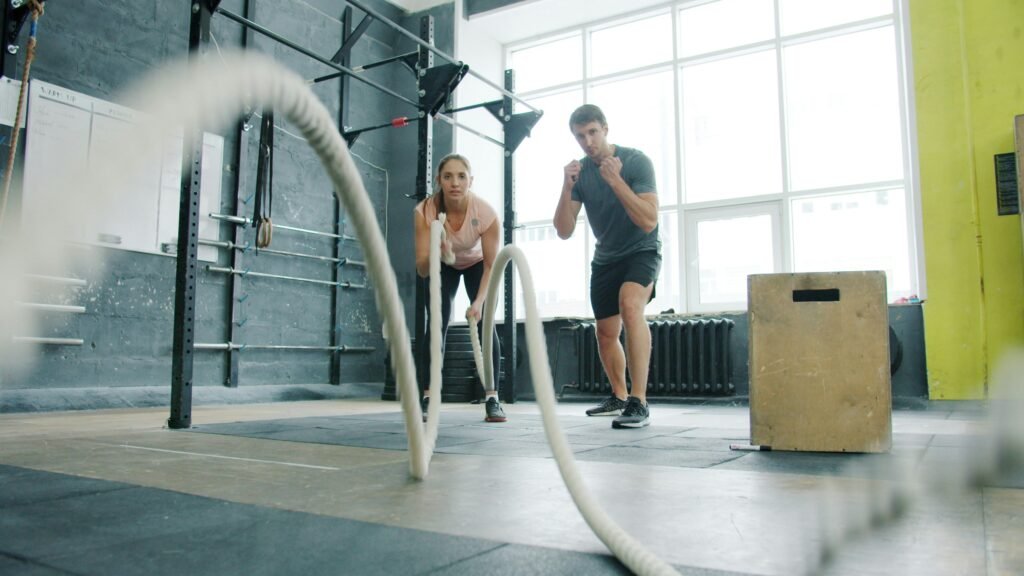
I’ve always struggled with choosing between functional fitness and traditional strength training. Should I aim for strong muscles or better mobility and balance? Both methods have their benefits, but understanding their diferences is key.
Traditional strength training focuses on lifting heavy weights and building muscle. But functional fitness is gaining popularity. It aims to make everyday movements easier and more efficient. Functional training works multiple muscles at once, preparing your body for real-life activities.
Key Takeaways
- Functional fitness improves balance, coordination, and joint mobility. Traditional fitness focuses on muscle growth and strength.
- Functional training uses bodyweight, kettlebells, and more to mimic real-life movements. Traditional fitness relies on machines and free weights.
- Functional fitness prevents injuries, saves time, and applies to daily life. Traditional fitness aims for maximum muscle and strength.
- Both methods have their benefits. It’s important to choose based on your goals and lifestyle.
- Mixing functional and traditional fitness can create a balanced, lasting fitness plan.
Understanding Functional Fitness
Functional fitness is a way to exercise that makes you better at everyday tasks. It’s different from traditional strength training because it uses exercises that work many muscles at once. This helps your body get ready for the things you do every day.
Definition of Functional Fitness
Functional fitness is about getting better at doing things you do every day. It uses exercises that work many muscles at once. This improves your strength, flexibility, balance, and coordination. It helps you handle the challenges of daily life better.
Key Principles of Functional Fitness
- Emphasis on bodyweight exercises and natural movement patterns
- Integration of strength, flexibility, and endurance training
- Utilization of versatile equipment like kettlebells, resistance bands, and medicine balls
- Emphasis on core stability, balance, and coordination
- Incorporation of compound exercises that engage multiple muscle groups
By following these principles, functional fitness aims to make you more physically capable for daily life.
“Functional fitness is about training your body to perform the movements and activities you do in daily life, not just lifting weights for the sake of building muscle.”
Exploring Traditional Fitness
Traditional fitness, also known as strength or resistance training, is a classic way to build muscle. It focuses on exercises that target specific muscles. The goal is to boost strength training and muscle isolation.
What is Traditional Fitness?
At its heart, traditional fitness is about progressive overload. This means slowly increasing the weight or intensity of workouts. It helps muscles grow and get stronger over time.
This method uses exercises like bench presses and bicep curls. These exercises target specific muscles for growth and strength.
Common Practices in Traditional Fitness
Bodybuilders use heavy weights and bodyweight exercises to build muscle size. Powerlifters focus on strength training for competitions. They do exercises like squats and deadlifts to work multiple muscles at once.
Traditional strength training uses machines, barbells, and dumbbells. It aims to lift the heaviest weights possible for muscle growth. Success is shown by one-rep max lifts, which measure raw strength and power.
“Traditional strength training leads to increased lean muscle mass, heightened bone density, elevated metabolism, and fat loss.”
While traditional fitness is great for muscle building, adding functional training is key. It improves overall fitness and helps prevent injuries.
Comparing Goals: Why Train?
Fitness goals can differ a lot. Some focus on everyday movements, while others aim for athletic performance. Knowing your goals helps pick the right training method.
Functional Fitness Goals
Functional fitness aims to boost everyday movements. Its main goals are:
- Enhancing balance, coordination, and agility for easier daily tasks.
- Improving strength and power for more efficient real-world tasks.
- Better posture, stability, and core engagement for daily life.
- Lowering injury risk by training for common activities.
Traditional Fitness Goals
Traditional fitness focuses on physical attributes and athletic skills. Its main goals are:
- Building muscle size and strength with specific exercises.
- Boosting cardiovascular endurance and health.
- Enhancing sports-specific skills and athletic abilities.
- Reaching aesthetic goals like a more muscular or lean body.
Your fitness goals decide between functional or traditional training.
“The key to choosing the right fitness approach is understanding your personal goals and the specific benefits each method offers.”
The Role of Movement in Functional Training
Functional training focuses on movements like squatting, lifting, pushing, and pulling. It uses compound exercises that work many muscles at once. This improves body coordination and efficiency. Traditional fitness often uses isolation exercises that target specific muscles.
Everyday Movements
Functional training includes movements like standing up from a chair or carrying groceries. These movements work many muscles, boosting strength, balance, and coordination. Adding these movements to your workouts prepares your body for daily life.
Compound vs. Isolation Exercises
Traditional strength training isolates specific muscles. But functional training focuses on compound exercises that work many muscles at once. Exercises like squats and push-ups mimic real-life movements. Isolation exercises, like bicep curls, target single muscles and don’t reflect how we move naturally.
“Functional strength training is distinguished by its focus on performance and functionality rather than just muscle size and strength, setting it apart from traditional strength training.”
Mixing compound and isolation exercises in your routine balances strength and functionality. Understanding movement patterns in functional training helps create a more effective fitness plan.
Equipment Used in Functional vs. Traditional Fitness
Functional and traditional fitness use different types of equipment. Functional fitness uses simple, versatile tools for full-body movements. Traditional fitness uses specialized machines and weights for specific muscle groups.
Functional Fitness Equipment
Functional fitness focuses on tools that mimic real-life movements. It includes bodyweight exercises, resistance bands, stability balls, and kettlebells. These help improve strength, stability, and mobility for daily tasks.
Functional training machines, like suspension trainers and TRX systems, also fit into this category. They challenge the body to work against gravity and maintain proper form.
Traditional Fitness Equipment
Traditional fitness uses specialized gym equipment like weight machines, barbells, and dumbbells. These tools target specific muscles for strength training. While effective for muscle growth, they may not improve real-world movements as much.
| Functional Fitness Equipment | Traditional Fitness Equipment |
|---|
- Bodyweight exercises
- Resistance bands
- Stability balls
- Kettlebells
- Suspension trainers
- TRX systems
- Weight machines
- Barbells
- Dumbbells
Choosing between functional and traditional equipment depends on your fitness goals and lifestyle. Functional equipment focuses on overall conditioning and real-world use. Traditional equipment targets specific muscle strength and size.
Mixing both types can create a balanced fitness routine. It meets your unique needs and goals.
“Functional training strengthens ligaments around muscles to prevent strain and injuries.”
Benefits of Functional Fitness
Functional fitness is more than just building muscle. It improves your daily life in many ways. It helps you move better and reduces injuries.
Enhancing Daily Life Activities
Functional fitness makes you more mobile and flexible. It strengthens your core and lower body. This makes simple tasks like climbing stairs or gardening easier.
Injury Prevention
Functional fitness also prevents injuries. It prepares your body for daily activities. This reduces the risk of back pain, shoulder issues, or knee problems.
Do functional exercises two to three times a week for 30 minutes. Do them before traditional strength training if you do both in one day. Start with light weights and fewer reps to avoid injuries, then increase.

Functional fitness improves your daily life and reduces injuries. It helps with pain, mobility, and moving easily.
“Functional fitness is not just about building muscle or achieving a specific physique. It offers a wide range of benefits that can enhance your everyday life.”
Advantages of Traditional Fitness
Traditional fitness is great for building muscle strength and improving heart health. It uses free weights, machines, and bodyweight exercises. These help grow muscles and increase body strength. It also improves muscle shape, bone density, and metabolism, helping with weight management and fat loss.
Building Muscle Strength
Traditional strength training lets you track progress and set goals clearly. Exercises like squats, deadlifts, and bench press work many muscles at once. This boosts strength. Strength training equipment gets high ratings, showing it’s effective and reliable.
Cardiovascular Endurance
Traditional fitness also boosts heart health. Adding cardio like running or cycling to your routine improves endurance and heart health. Strength training items are priced from $5 to $170, making them affordable for many.
Regularly doing strength training and cardio improves self-esteem and sports performance. It also enhances overall well-being. Combining traditional fitness with functional training offers a complete fitness plan for life.
| Traditional Fitness | Functional Fitness |
|---|---|
| Focuses on building muscle strength, size, and overall power. | Emphasizes improving functionality, balance, coordination, and core stability. |
| Utilizes fixed machines, barbells, and dumbbells for resistance training. | Incorporates dynamic, full-body exercises using bodyweight, kettlebells, and other functional equipment. |
| Measures success through maximum weight lifted. | Gauges success through improved mobility and reduced injury risk. |
| Tends to build larger, more powerful muscles. | Focuses on enhancing overall functionality and practical strength. |
“Strength training is the foundation for all other physical activities. It’s the key to maintaining a healthy, active lifestyle as we age.”
Target Demographics for Functional Fitness
Functional fitness is great for everyone, no matter your age or fitness level. It’s perfect for young adults, seniors, or anyone recovering from an injury. It helps you live better and stay active.
Who Should Consider Functional Training?
Functional fitness is great for improving daily activities or sports performance. It’s also good for older adults to stay independent and avoid falls. People with chronic conditions or injuries find it helpful for recovery.
Age and Fitness Level Considerations
Functional fitness works for all ages and fitness levels, from young to old. While it might not work as well for women as men in the same age group, it’s still great for improving mobility, balance, and strength. It’s good for everyone, regardless of gender or age.
Start with simple bodyweight exercises and add free weights or functional equipment later. More experienced folks can try harder movements. Functional training is for everyone, at any fitness level.
“Functional fitness training engages the whole body with compound exercises, whereas traditional strength training focuses on isolated exercises targeting specific muscle groups.”
Adding functional fitness to your routine can improve daily life, lower injury risk, and boost independence. It’s good for people of all ages and abilities.
Target Demographics for Traditional Fitness
Traditional fitness focuses on building muscle and increasing strength. It attracts bodybuilding fans and strength athletes who like structured exercises. Young adults and fitness enthusiasts enjoy it for shaping their bodies and boosting strength.
Suitable Populations for Traditional Workouts
Strength sports athletes use traditional training to meet their goals. They focus on specific muscles and use tools like dumbbells and barbells. This type of fitness is great for many ages, but most popular among 20s and 30s for muscle gain and strength.
Popularity Among Age Groups
Younger people love traditional fitness for its muscle and strength benefits. Young adults in their 20s and 30s aim to improve their physique and athleticism. As people get older, they might look into other fitness options like functional fitness for staying mobile and healthy.

In summary, traditional fitness is for bodybuilding fans, strength athletes, and young adults wanting to build muscle and strength. It’s most popular among 20s and 30s for muscle and strength gains.
“Functional fitness differs significantly from High-Intensity Interval Training (HIIT) and calisthenics in its focus and outcomes.”
Potential Drawbacks: Functional vs. Traditional
Both functional and traditional fitness have their own benefits and drawbacks. Knowing these can help you choose the best workout for your goals.
Limitations of Functional Fitness
Functional fitness might not build muscle as much as traditional training. It focuses on compound movements, which can mean less muscle isolation. Also, tracking progress in functional fitness can be tricky, as it’s based on real-world tasks, not just strength or endurance.
Downsides of Traditional Fitness
Traditional fitness is great for muscle strength and heart health, but it has its downsides. It can cause muscle imbalances, raising injury risks. It might also limit how well you can do everyday tasks.
Both methods need proper guidance to avoid problems. Getting advice from experts can make your workouts safe and effective, no matter your choice.
Choosing between functional and traditional fitness depends on your goals and lifestyle. Understanding each method’s strengths and weaknesses helps you create a fitness plan that fits you perfectly.
Incorporating Both Approaches
A balanced fitness program can mix elements from both functional and traditional training. This blend, combining strength exercises with functional movements, boosts physical development. Switching between these workouts improves your fitness, covering strength, function, and heart health.
Hybrid Training Methods
Functional fitness exercises focus on working muscles together, not just one at a time. This mix can be added to traditional workouts. It helps improve daily movements, lowers injury risk, and boosts function.
Using big muscle groups in workouts can raise testosterone levels in men, aiding muscle growth and upkeep. A mix of strength, flexibility, and balance training promotes muscle health and hormonal balance.
Benefits of a Combined Approach
Functional fitness training can complement traditional strength-building exercises to create a comprehensive, balanced fitness program. This mix boosts muscle strength and endurance and improves core stability. It’s key for health and performance in many activities.
Adding High-Intensity Interval Training (HIIT) to your routine can enhance heart health, leading to a full-body workout. Getting help from functional fitness trainers can tailor your program and teach proper techniques.
Setting SMART goals and tracking your progress keeps you motivated. Adding flexibility exercises, yoga, or Pilates improves flexibility, balance, and body awareness.
“Integrating functional fitness into your routine can help you develop a balanced, versatile physique that is prepared for the demands of everyday life.”
By blending functional and traditional fitness, you get a balanced program that boosts your physical abilities. This mix unlocks new fitness levels and helps reach health and wellness goals.
Making the Choice: Functional or Traditional?
Choosing between functional and traditional fitness depends on your goals and lifestyle. Think about what you want to achieve in your fitness journey. Do you aim to build muscle, boost endurance, or improve daily activities? Your goals will steer you towards the best choice.
Personal Goals and Preferences
If you want to focus on specific muscles, traditional strength training might be for you. It uses precise movements and heavy weights, perfect for beginners. But, if you’re after overall strength and coordination, functional training could be the way to go. It focuses on full-body movements that mirror real-life activities.
Assessing Your Lifestyle Needs
It’s also important to think about how your lifestyle fits with your training. Functional training suits those with active lifestyles, like busy parents or teachers. It prepares your body for daily tasks. Traditional training, on the other hand, is great for those with access to a gym and time for focused workouts.
The best fitness plan is one you love and can stick to for health benefits. Talk to fitness experts to craft a plan that matches your goals and lifestyle. A mix of functional and traditional training can offer a balanced fitness routine for your health and well-being.