

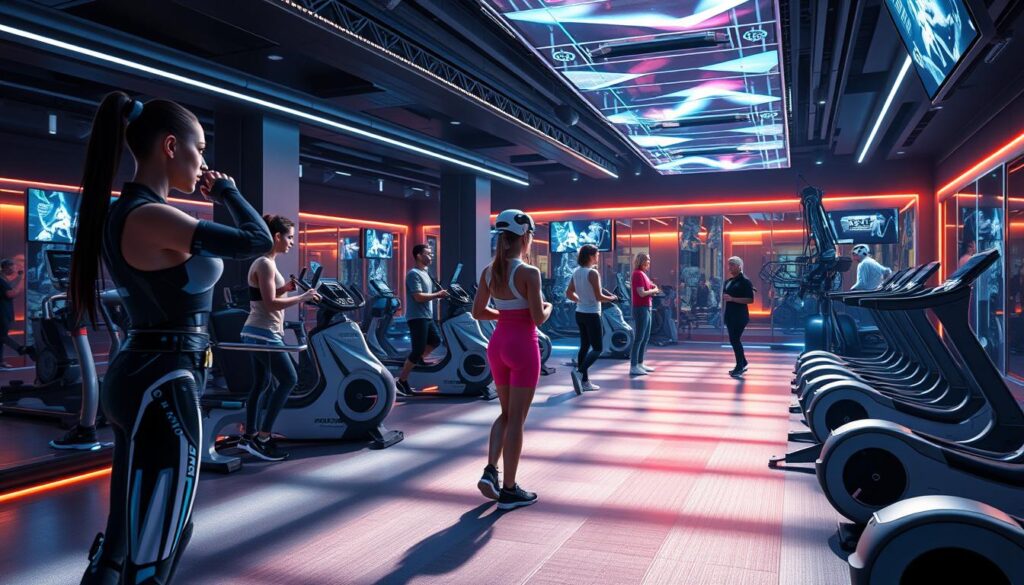
Imagine walking into your home gym and finding a fitness plan made just for you. It’s created by AI that knows exactly what you need and want. Is this the start of a new era in fitness, or just another trend?
The fitness world is changing fast, moving from old ways to using AI for personal training. Tonal, for example, grew by 800 percent in its first year of the pandemic. It keeps its members coming back, with a less than one percent churn rate. The Future fitness app has also raised over $110 million, showing a big move towards fitness plans made just for you.
Experts say the fitness app market will hit $15.6 billion by 2028, up from $3.3 billion in 2019. With tools like FitnessAI’s Intelligent Workout Plans, which started in 2019, fitness is changing quickly. Now, with Apple Fitness+ and the Google Pixel Watch 2, you can make fitness plans that change as you do, thanks to AI and big data.
Key Takeaways
- The growth of AI-driven fitness solutions is reshaping personal training.
- Tonal experienced 800% growth in its first year of the pandemic.
- The global fitness app market is expected to reach $15.6 billion by 2028.
- Future fitness app raised over $110 million demonstrating market potential.
- Intelligent workout plans enhance user experience and accountability.
The Evolution of Fitness Technology
Fitness technology has changed a lot, thanks to smart tools. Devices like the Apple Watch have helped people reach their fitness goals. This fitness technology evolution has changed how we work out and take care of our health.
AI in fitness has brought personalized solutions. AI is making fitness more efficient and fun. Now, fitness apps can create workouts just for you. Apps like MyFitnessPal even plan meals based on what you like, helping with nutrition.
AI has set a new standard for fitness. It helps with training, diet, and predicting health issues. Wearables like WHOOP and OURA give insights to improve workouts.
Today’s fitness tech uses machine learning to improve workouts. It adjusts based on how you do. This tech is growing fast, expected to reach $27.4 billion by 2024.
| Technology | Impact | Benefits |
|---|---|---|
| AI Fitness Apps | Personalized workout plans | Increased engagement and satisfaction |
| Wearables (e.g., WHOOP, OURA) | Health metric tracking | Actionable insights for optimizing workout |
| Predictive Analytics | Identifying possible health issues | Improved client outcomes |
How AI is Revolutionizing the Fitness Industry
The AI revolution in fitness is changing how we work out. AI-powered fitness platforms analyze our data to create workouts just for us. This makes workouts more fun and helps us stick to them.
AI gives us feedback and motivation during our workouts. It turns fitness into a game with challenges and rewards. This makes our workouts more exciting.
Over 47 million people worldwide use AI fitness programs. It’s amazing how AI combines personal plans with new tools for our fitness journey.
AI looks at lots of data to find trends that humans might miss. This helps make our workouts better. The future of fitness with AI looks very promising.
Understanding AI-Powered Personal Training
AI-powered personal training changes how we get fit. It uses smart algorithms to make workouts fit your level, goals, and likes. This makes your workouts more effective because they change to fit you better, something old methods can’t do.
What is AI-Powered Personal Training?
AI-powered personal training uses cool tech to make your fitness journey unique. Apps like Fitbod adjust your workouts to keep you improving. This means you get workouts that match your current fitness level, making your fitness journey better. Now, more people can get personalized plans, not just those who can pay for personal trainers.
Benefits of AI-Powered Training in Fitness
AI training makes fitness more accessible. Now, more people can get workout plans that fit them, not just those who can pay for personal trainers. For example, Future costs $199 a month, but FitnessAI is just $15. This makes fitness more for everyone, not just the rich.
The fitness world is changing fast, and AI training is leading the way. AI tools make fitness better by giving you plans that fit your life, changing how we train.
The Role of Machine Learning in Workout Plans
Machine learning is key in making workout plans that fit each person’s needs. It uses algorithms to look at user data. This helps create *machine learning workout plans* that change based on how well you do.
Adaptive Training Programs
Adaptive training is important for meeting different user needs and goals. Machine learning looks at past workout data, like weight and fitness history. It makes detailed profiles for each user.
It finds the best times for workouts and how well you do certain exercises. This means your training plans can change as you get better.
AI systems adjust how hard your workouts are based on how you’re doing. They can change things up during your workout. They also suggest new exercises if needed.
This makes workouts more fun and keeps you motivated. It uses games and rewards to keep you going.
Customizing Fitness Goals with AI
AI helps make fitness goals that are just for you. It plans out your workouts, including what exercises to do and how hard. It also figures out how long to work out and when to rest.
It watches how you’re doing in real time. It tells you if your form is off and how to do better. This makes your workouts more effective.
AI can also look at what you eat. It suggests meals and recipes that help you reach your fitness goals. This makes sure you’re taking care of your whole health.
Smart Digital Trainers: The New Personal Trainers
Smart digital trainers are changing the game in personal training. They use advanced AI technology in fitness apps. This makes workouts more engaging, personalized, and effective for everyone.
Integration of AI in Fitness Apps
AI in fitness apps is changing how we work out. These apps use lots of data to create workout plans just for you. For example, the Assistant Coach uses millions of conversations and workout plans to give you the best advice.
This tech makes planning workouts easier and answers your questions fast.
Examples of Leading AI Fitness Platforms
Many top platforms show what smart digital trainers can do. FitBudd, with its 5-star rating, offers a free trial to try personalized training. Fitbod and MyFitnessPal help with workout plans and nutrition advice.
Vi Trainer is known for its real-time voice coaching, making cardio better with feedback.
| Platform | Main Features |
|---|---|
| FitBudd | 30-day free trial, 5-star rated by trainers, personalized training |
| Fitbod | Adaptive workout plans, muscle recovery insights |
| MyFitnessPal | Personalized nutrition suggestions |
| Vi Trainer | Real-time voice coaching |
| Gyroscope | Aggregates health data for holistic insights |
| JEFIT | Customizable workout plans with progress tracking |
| Tempo | 3D sensors for real-time form correction |
| Mirror | Live and on-demand fitness classes with feedback |
| Krisp | AI noise-canceling for clear communication |
| Nudge Coach | Combines AI with human coaching |
The Benefits of Automated Exercise Guidance
Automated exercise guidance is changing how we work out. It gives us feedback in real-time, making sure each session is just right for us. This makes training better and boosts our motivation and happiness.
Real-Time Feedback for Users
Real-time user feedback is key in fitness. It lets us adjust our form and technique right away, keeping us safe and effective. These systems watch how we do and suggest ways to get better.
For example, AI might suggest changes based on how hard we’re working. This makes our workouts feel more personal. Getting this feedback helps us see big improvements, helping us reach our fitness goals.
Enhanced Engagement and User Experience
Adding automated exercise guidance to fitness programs makes workouts more fun and engaging. It makes us want to keep going on our fitness journey. This tech not only motivates us but also tracks our progress well.
For instance, AI can change the intensity and volume of our workouts based on our data. This gives us a workout that’s just for us. Fitness pros can then focus on helping us, not just doing paperwork. This leads to happier and more loyal customers, which is good for fitness businesses.
Intelligent Virtual Gym Sessions
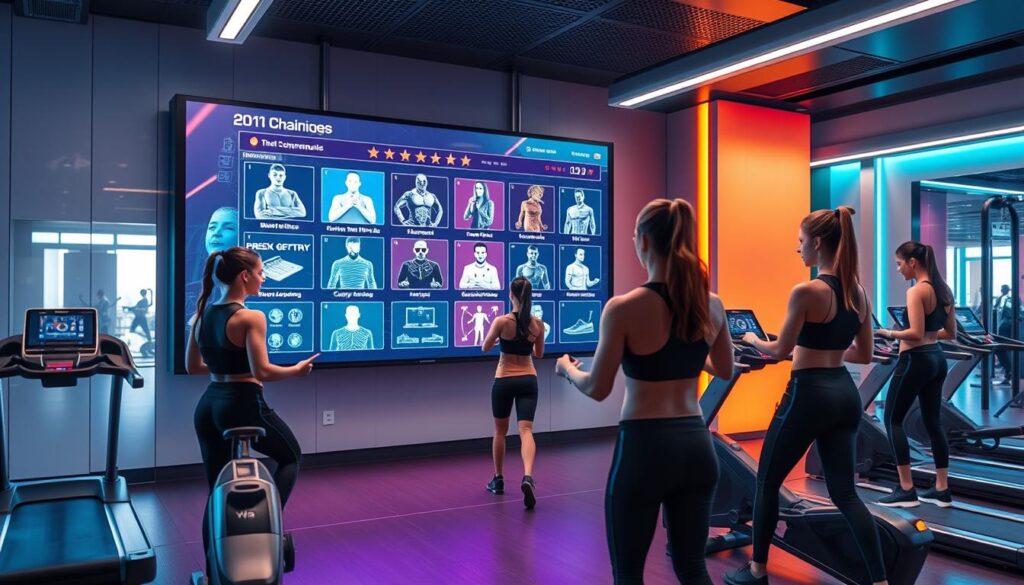
Virtual gym sessions are changing the fitness world. They use AI coaches to make workout plans just for you. For example, at Lumin Fitness in Las Colinas, Texas, you can pick your AI coach. You can choose based on voice and attitude.
How Virtual Coaches Create Custom Programs
AI coaches watch how you move and what equipment you use. They make sure your workouts are tracked right. They also give you feedback on your form and how well you’re doing.
This helps you stay on track and reach your fitness goals. It keeps you motivated and focused.
Social Interaction in Digital Fitness Communities
Virtual gym sessions also offer a chance to connect with others. You can join AI fitness communities and meet people with similar goals. It’s a place for support, advice, and sharing success stories.
Tools like ChatGPT make talking to others easier. It helps you share your wins and get help when you need it.
Current Trends in Personalized Online Training
The world of online fitness training is changing fast. This is thanks to new tech and people wanting more personal experiences. Wearable tech lets us track our health in real time, like heart rate and calories burned. This shows a move towards fitness that’s made just for each person.
Growth of Fitness Apps and Wearable Devices
Fitness apps are everywhere, and the market is expected to hit $250.7 billion by 2032. This is a growth rate of 32.7%. Apps like WHOOP and Oura Ring offer unique experiences through subscriptions. They help users track their workouts and reach their fitness goals.
Consumer Demand for Customized Workouts
More people want workouts that fit their needs and fitness level. Studies show that 71% of them believe chatbots can get them to exercise more. AI makes training plans that match each user’s profile. Platforms are making workouts fun with challenges and rewards, making users happier and more engaged. In fact, 59% of Reddit users like AI in fitness.
The Impact of Big Data on Fitness Personalization
Big data in fitness is key to making experiences more personal. Fitness experts use it to craft plans that fit each person’s needs. AI looks at performance, health, and goals to make workout plans that change as you do.
Wearable devices also play a big role. They track important health stats, helping to improve these plans.
Utilizing Data Analytics in Training Plans
Data analytics are vital for making training plans better. AI uses past and current data to spot trends and meet user needs. This helps in making plans that keep users interested.
AI also helps in setting prices based on demand, which can boost revenue. Plus, AI-driven wearables give workout tips that match what you like and do.
The use of data analytics in fitness is becoming more important. Machine learning lets virtual coaches tweak workouts on the fly. This ensures you get the most out of your training.
By using big data, I can change how we train. This leads to better results and a more enjoyable fitness journey.
AI Solutions for Injury Prevention and Rehabilitation
In today’s fitness world, AI has changed how we keep fit. It helps us exercise safely and recover from injuries better. This is thanks to advanced technology.
Monitoring Movement Patterns for Safety
AI uses smart algorithms to watch how we move. It makes sure we’re safe while working out. It gives real-time feedback on how we’re doing, spotting bad moves that could hurt us.
Using AI can cut down on US healthcare costs by about $150 billion by 2026. This shows how big of a deal AI is for keeping us safe and saving money.
Guided Recovery Plans Through AI Technology
AI helps create recovery plans that fit each person’s needs. It makes getting back to full strength easier. AI tools track how we move, stand, and use our muscles.
This feedback helps us recover better and avoid more injuries. AI will soon make rehab plans for each person and keep track of how they’re doing. This means better care for those in physical therapy.
By using these technologies, we’re moving towards a more data-driven way of rehab. This is great for improving how patients do in physical therapy.
Challenges in AI Personal Training
Exploring AI personal training reveals key challenges. Data quality and reliability are vital for these systems to work well. Despite AI’s innovative abilities, several obstacles hinder its effectiveness. These need to be overcome for a better user experience.
Data Quality and Reliability Issues
The success of AI fitness programs depends on the data they use. AI has been in the fitness software market for over ten years. Yet, its effectiveness is often limited by data quality issues.
AI analyzes factors like age, height, and fitness levels to create personalized workouts. This can lead to faster results. But, biased or incomplete data can result in wrong recommendations. This erodes trust in AI solutions.
Privacy and regulatory concerns also grow as AI fitness apps evolve.
Dependence on Technology over Human Interaction
Another challenge is the decrease in human interaction. AI virtual coaching offers real-time feedback. Yet, this can reduce personal connections.
Over-reliance on technology may lower motivation and engagement. It could also reduce accountability, a role personal trainers traditionally fill. AI’s introduction could lead to job losses for personal trainers, reshaping the fitness industry.
There are also concerns about bias in AI recommendations. This can create an unfair playing field in workout suggestions. AI’s adaptability is limited compared to human trainers, requiring constant updates.
| Challenge | Description |
|---|---|
| Data Quality | Impact of biased or incomplete data leading to incorrect recommendations. |
| Privacy Issues | Concerns regarding the storage of sensitive user information in AI apps. |
| Human Interaction | Reduction of personal connections due to reliance on virtual coaching. |
| Job Losses | Potential job losses for personal trainers due to AI advancements. |
| Bias Concerns | Unequal workout suggestions arise from bias in AI recommendations. |
| Adaptability | AIs lack adaptability compared to human trainers needing constant updates. |
Combining AI with Traditional Personal Training
The fitness world is changing fast, and AI is making a big impact. Trainers can now work with more clients and do their jobs better. This mix of old and new keeps the personal touch that makes coaching great.
This way, trainers can help more people while keeping the human connection strong. It makes clients more engaged and motivated in their fitness journeys.
The Balance Between Automation and Human Touch
AI gives great insights and workout plans that fit each person. But, nothing beats the human touch in personal training. AI can help, but it can’t replace the support and care that trainers offer.
When clients use both AI and trainers, they get a complete experience. This mix lets trainers use AI to improve their work. They get updates and track how well things are going, making training safer and more effective for everyone.
Enhancing Trainer Efficiency with AI Tools
AI makes trainers more efficient by handling routine tasks and giving new insights. This lets trainers spend more time building strong relationships with clients. But, it’s important not to rely too much on technology.
Trainers add a special touch that AI can’t fully match. Finding the right balance means keeping the best of both worlds. This way, trainers can offer top-notch fitness results by combining human skill with AI’s power.
