
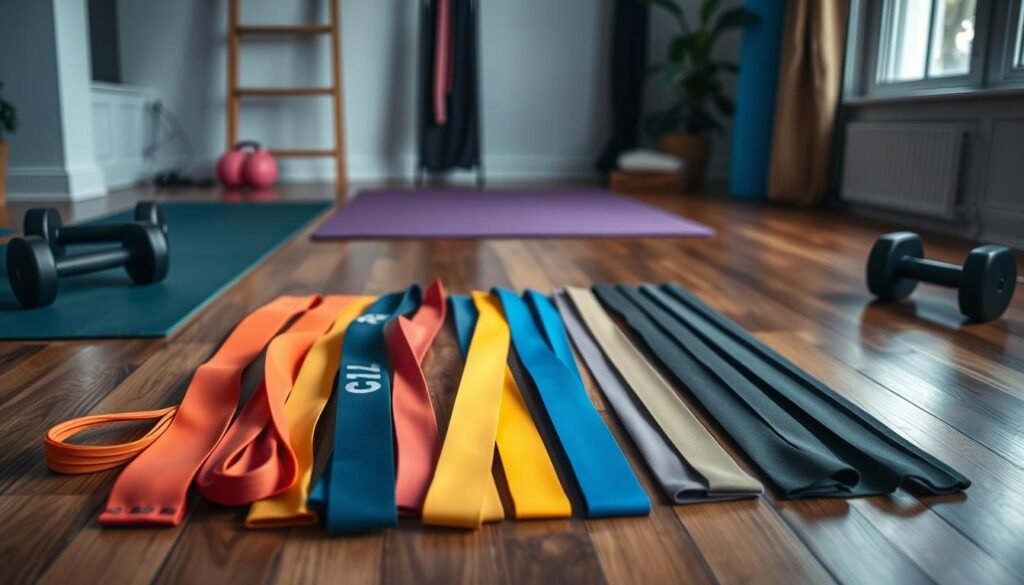
Ever thought about how simple tools like resistance bands could change your fitness? The best resistance bands for beginners in the USA are affordable and boost strength, stability, and mobility. They don’t need bulky equipment.
In fact, 41 resistance bands were tested in the Verywell Testing Lab and at home. They found the best options for beginners in the USA. Each band was tested in 15-30 minute full-body circuits, three times a week for four weeks. This gave valuable insights into what works best for you.
This article will explore the benefits of using beginner resistance bands. We’ll look at different types and help you pick the right ones for your home workouts.
By the end of this guide, you’ll be ready to tackle your fitness goals. You’ll have the top resistance bands for beginners to make your journey effective and fun.
Key Takeaways
- Resistance bands are versatile tools for enhancing workouts at home.
- They improve strength, stability, and mobility without bulky equipment.
- Testing involved over 40 bands across various styles for the best options.
- Resistance bands cater to both beginner and advanced fitness enthusiasts.
- Each band offers different resistance levels to suit your workout needs.
Benefits of Using Resistance Bands for Beginners
Resistance bands are great for beginners because they’re easy to use. They offer a flexible way to boost your workout, just like gym equipment. A 2019 study showed they can help you get stronger.
They also help tone muscles, especially in the upper body. This is thanks to the controlled tension they provide. It helps you stretch better and reduces injury risks, perfect for newbies.
Moreover, these bands are budget-friendly. A good set costs about $25. This lets you work out fully without heavy weights. Beginners should do two sets of 15 reps of five exercises twice a week for strength and flexibility.
They’re also great for rehab, helping with muscle pain and recovery. They’re light and easy to carry, making them perfect for home or travel workouts. This ensures you can keep up with your fitness goals anywhere.
Types of Resistance Bands
It’s important to know the different types of resistance bands. This helps you pick the best ones for your fitness goals. Let’s look at the four main types, each with its own benefits for your workouts.
Loop Bands
Loop bands are made from elastic material and come in various sizes and resistance levels. They’re great for lower-body exercises like squats, leg lifts, and hip abductions. Their small size makes them perfect for working out at home or on the move, helping to strengthen your legs and glutes.
Tube Bands
Tube bands have handles on each end, making them easier to hold during workouts. They’re versatile and can be used for both upper and lower body exercises. Many people like to use tube bands with a door anchor for more variety and resistance, meeting both strength training and stretching needs.
Power/Assist Bands
Power/assist bands are thicker loop bands, often used for assisted pull-ups and strength exercises. They offer a lot of resistance, making them great for those who want to improve their training. These bands are better at activating muscles than traditional weights because they provide resistance in all directions, leading to better muscle engagement.
Resistance Straps
Resistance straps are for lighter resistance, used in stretching, yoga, and rehab. They offer a gentle workout, improving flexibility and range of motion. If you’re just starting or focusing on recovery, resistance straps are a great choice for your fitness tools.
Choosing the Right Resistance Bands for Beginners
Choosing the right resistance bands is important. You need to think about your fitness goals and how strong you are. For beginners, look for top resistance bands for beginners with different levels of resistance. This lets you start easy and get harder as you get stronger.
Start with lighter bands and then get heavier ones as you get stronger. Pick bands that match your favorite exercises. Many bands work well for lots of exercises, like pull-ups and dips.
When picking beginner bands, look for ones that let you mix different levels of resistance. Using up to three bands at once can make your workouts better, fitting your strength level.
Knowing the right resistance levels is key, especially for exercises like dips and squats. Starting light helps avoid injuries and helps muscles grow. The right bands will help you start your fitness journey right.
Features to Look for in Beginner-Friendly Resistance Bands
When looking for beginner-friendly resistance bands, focus on quality and function. Durability is key for safety during workouts. Choose bands made from high-quality materials that can handle frequent use.
It’s also important to have a variety of resistance levels. Find affordable bands that let you do 10-12 smooth reps per set. This way, you can adjust as your strength grows. Look for bands with different tensions for various exercises.
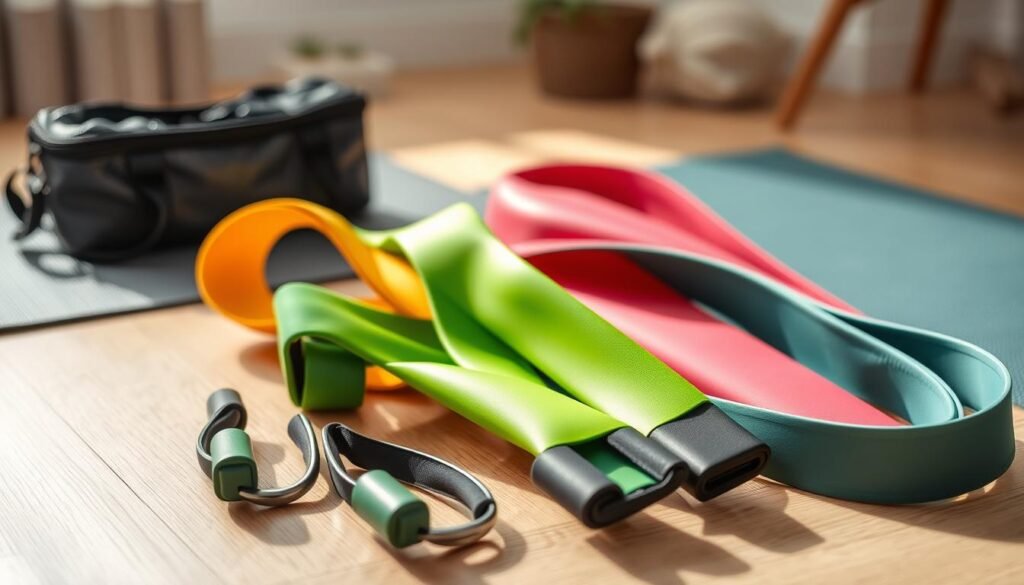
Comfort in handles is crucial. A good grip prevents slipping, making your workout better. Also, bands with a carrying case make them easy to take and store.
Features like clear resistance labels make workouts easier. Focus on these to find bands that match your fitness level and improve your training.
| Resistance Band Color | Resistance Range | Thickness |
|---|---|---|
| Green | 3-6 lbs | 0.3mm |
| Blue | 7-10 lbs | 0.5mm |
| Yellow | 11-15 lbs | 0.7mm |
| Red | 16-20 lbs | 0.9mm |
| Black | 21-25 lbs | 1.2mm |
Choose bands with linear variable resistance (LVR) for better form and muscle activation. This reduces injury risk. These features are essential for starting your fitness journey.
Best Resistance Bands for Beginners USA
Starting your fitness journey? You need the right tools. This section shows the top resistance bands for beginners in the USA. They offer quality, versatility, and are affordable.
Top Picks and Reviews
These resistance bands are the best for beginners in the USA. They are known for their performance and how much users like them.
| Brand | Features | Resistance Range | Price | User Ratings |
|---|---|---|---|---|
| FitCord Original Resistance Bands | Padded handles, safety sleeve, pre-stretched, can be used without an anchor | 7 tension options | Varies | Praised for comfort and safety |
| Supalak 15-Piece Resistance Bands | 5 bands, excellent ergonomics | 20 – 150 lbs | $40 | Average score: 90 |
| Walito Resistance Bands | Durable, lightweight | 14 – 50 lbs | $14 | Average score: 68, durability score: 9.0 |
| Fit Simplify Resistance Loop Exercise Bands | 12-inch diameter, versatile | Two to 30 lbs | $10 | Popular for flexibility |
| TheFitLife Resistance Pull Up Bands | Strong pull-up support | 15 to 175 lbs | $25 | Reliable for strength training |
Choosing the right resistance bands can make your workouts better. Each brand has something special, like FitCord’s safety or Supalak’s ergonomics. Reading reviews can help you pick the best for your goals.
Affordable Options for Home Workouts
Finding affordable resistance bands that are good quality is key for beginners. There are many options for those starting out, making it easy for everyone to get fit at home. The Bodylastics resistance band kit offers resistance from 3 to 30 pounds, with a total of 404 pounds when all bands are used together. The Black Mountain set has five bands, each with different resistance levels, allowing for up to 40 to 50 pounds of combined resistance.
Budget-Friendly Resistance Bands
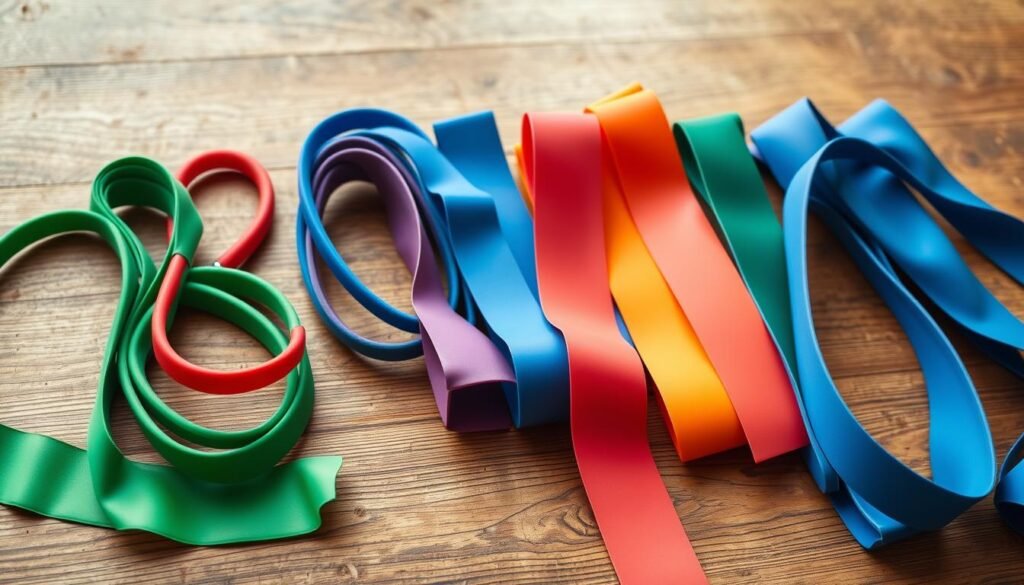
For beginners, it’s important to find high-quality yet affordable resistance bands. The Fit Simplify resistance loop bands set has five loops with different resistance levels, from “extra-light” to “extra-heavy”. The TheraBand non-latex resistance bands beginner set offers three bands with resistance ratings of 4.3, 3.7, and 6.7 pounds, perfect for newbies. The Perform Better mini band loops set includes four loops, likely offering resistance between 3 to 30 pounds.
Quality vs. Affordability
Choosing bands that balance quality and price is important. You want bands that are durable and won’t break during workouts. While cheap bands might seem good, it’s better to pick durable ones for a safer workout. For example, the SPRI Braided Xertube resistance bands are made with Tuff-Tube rubber, making them a good investment at nearly $30 per band. Serious Steel Heavy Duty Resistance Bands offer a strength range from 5 to 150 pounds and various bundle sets, providing quality options within your budget.
| Band Type | Resistance Range | Price |
|---|---|---|
| Black Mountain | 2 to 30 lbs | $20 |
| Bodylastics | 3 to 30 lbs (total 404 lbs) | $30 |
| Fit Simplify | Extra Light to Extra Heavy | $17 |
| TheraBand | 4.3 to 6.7 lbs | $16 |
| SPRI Xertube | Varied | $30 each |
How to Use Resistance Bands Effectively
Using resistance bands can change your workout for the better, especially if you’re new to it. Start with a good warm-up to get your muscles ready and avoid injuries. Adding dynamic stretches helps make your body more flexible and gets blood flowing before you start exercising with the bands.
Warm-Up Techniques
- Arm Circles: Use your shoulders and arms for gentle circular movements.
- Leg Swings: Move your hips by swinging your legs forward and backward.
- Torso Twists: Stretch your spine and core by rotating from side to side.
Full-Body Workouts
After warming up, focus on full-body workouts that work all major muscle groups. Aim for a 30-minute session that covers upper and lower body exercises. Beginners should do 3 to 4 sets of each exercise, aiming for 20 reps. Include exercises like banded squats, push-ups, and resistance rows to build strength and endurance.
Here are some tips to boost your results:
| Exercise | Repetitions | Sets | Resistance Level |
|---|---|---|---|
| Banded Squats | 10-15 | 3-4 | 10-15 lbs |
| Resistance Rows | 10-15 | 3-4 | 10-15 lbs |
| Push-Ups | 10-15 | 3-4 | Body weight or band assisted |
As you get better, increase your workouts from 2 to 3 times a week. Rest for 48 hours between sessions to help your body recover and grow.
Adding these methods to your routine will make your workouts more rewarding with beginner workout resistance bands.
Maintenance and Care for Resistance Bands
To keep your resistance bands working well and safe, it’s important to take care of them. A few simple steps can make them last longer. Keeping them in good shape also makes sure you stay safe while exercising.
Storing Your Bands
Store your resistance bands in a cool, dry place, away from sunlight and heat. Too much heat can make them lose their stretchiness and wear out faster. Use a carrying case to keep them from getting tangled or damaged. This way, they’ll stay in good working order for your workouts.
Cleaning Tips
It’s key to clean your resistance bands often to keep them clean and lasting longer. Wipe them down with a damp cloth after each use to stop germs and keep them looking good. Don’t use strong soaps or cleaners that could harm them. A soft wipe is enough. Check the ends where the handles meet the bands for any wear or damage. By following these tips, you’ll get the most out of your bands and stay safe while exercising.
Remember to stretch your bands a bit before using them. This helps keep them elastic and makes your workouts more effective. By following these care tips, you’ll make your bands last longer and have a safer workout.
Common Mistakes to Avoid with Resistance Bands
Working with resistance bands requires avoiding common mistakes for a safe and effective workout. One big mistake is not having the correct amount of tension in the band. Bands that are too light or too heavy can cause inefficiency and injury. It’s key to keep the right tension, especially since bigger muscles need more force than smaller ones.
Another mistake is overstretching the resistance band, which can cause it to break. Also, picking the wrong anchor point can mess up your form and make your workout less effective. Always check your bands for damage before using them; damaged bands can be dangerous.
Using your core during exercises helps keep the anchor point stable, making your workout better. Keeping steady tension in all reps also makes your workout more effective. Knowing the right range of motion helps you use the right amount of resistance, making your routine more beneficial.
To get the most out of your workout, get a set of resistance bands with different levels of resistance. This lets you tailor your workouts to the muscles you’re targeting, making your training more effective. Remember, proper form and speed are key to doing well in your exercises.
| Mistake | Description |
|---|---|
| Incorrect Tension | Using bands too light or too heavy, leading to inefficiency and risk of injury. |
| Overstretching | Pulling bands too far can cause them to break. |
| Wrong Anchor Point | Improper attachment can compromise form and exercise effectiveness. |
| Neglecting Band Damage | Not checking for band wear can lead to accidents during exercise. |
| Improper Resistance Selection | Larger muscle groups need more tension; using lighter bands may not yield results. |
Conclusion
Resistance bands are great for beginners. They work many muscles and are easy on your joints. This makes them perfect for those with joint pain or injuries.
They can make your home workouts better, whether you want to get stronger, more flexible, or recover from an injury.
It’s important to pick the right resistance bands for your goals. You can find affordable options like the Tribe Lifting bands for $20. Or, if you’re serious, the Rogue Fitness Monster Bands are $71 for gym lovers.
Many bands are lightweight and easy to store, so you can find something that fits your needs without spending a lot.
Adding resistance bands to your workouts can make them more effective. It also makes training affordable and flexible.
We suggest looking into different types of bands. Check their safety features and read reviews. This will help you choose the best beginner-friendly resistance bands for your home workouts.