
Ever wondered why some diets work for some but not others? This is at the core of nutrigenomics, which studies how our genes and nutrition are linked. It offers a new way to improve fitness through personalized diets.
By matching my diet to my genes, I can boost my fitness and meet my nutritional needs. Studies show genes play a big role in what we eat and how we digest it. Nutrigenomics helps us understand how genes affect how we react to food, leading to better diets for each person. It’s not just about getting better; it’s about connecting genetics and fitness for better health.
In today’s health-conscious world, nutrigenomics is key. Knowing my DNA helps me choose the best foods for my fitness goals and health. Let’s see how nutrigenomics can lead to better fitness and health.
Key Takeaways
- Nutrigenomics explores the relationship between genes and nutritional responses.
- Personalized diets can optimize fitness performance based on unique genetic factors.
- Genetic variations significantly influence dietary intake and metabolism.
- Understanding my genetic profile can help identify optimal nutrient consumption.
- Employing nutrigenomics can lead to better long-term health outcomes.
- A professional consultation is essential for interpreting genetic test results effectively.
Understanding Nutrigenomics
Nutrigenomics is a field that links my diet to my genes. It looks at 70 or more genes to give me diet plans based on my genetics. This helps me see how genes affect nutrition and how to choose better foods for health.
Exploring nutritional genomics, I learn that dietitians can explain how genes and health risks affect my diet. Studies show genes play a big role in blood sugar levels, but diet and exercise matter too. This shows why a diet plan made just for me is key.
Genetic testing has become cheaper, making it easier for health enthusiasts to get insights. These tests give me personalized advice on nutrition and fitness based on my genes. Knowing how my genes affect nutrient absorption is essential.
The human genome has 20,000 to 25,000 genes, each influencing how I process food. For example, knowing about the CYP1A2 gene helps me plan my caffeine intake for better sports performance. This knowledge lets me make diet choices that fit my genetic needs.
Definition and Scope of Nutrigenomics
Nutrigenomics is a field that looks at how food and genes work together. It studies how what we eat changes our genes, helping us understand what’s best for each person. This field is important because it shows how different foods can affect our DNA and how our genes can change how we react to food.
The scope of nutrigenomics is wide, touching on health and preventing diseases. For example, our genes play a big role in how we process food and react to diets. Studies show that our genes can even influence what we eat and how much we eat, affecting our risk for obesity and heart disease. About 10% of people are more likely to get heart disease because of their genes and diet.
This field is key to making food choices that fit our genetic needs. Knowing how our genes and diet interact can help us make better food choices. For instance, research shows that our genes can affect how well we do on different diets, like low-carb versus low-fat.
The Science Behind Nutrigenomics
The science of nutrigenomics looks at how nutrition and genetics work together. It studies how different nutrients affect our DNA. This field combines biochemistry, physiology, and more to understand how genes and nutrients interact.
It shows that how we process nutrients can change based on our genes. This means different people can react differently to the same foods. It’s why personalized diets are becoming more important.
Knowing about genetic variations is key. For example, some genes can affect how we handle carbs, leading to health issues like diabetes and obesity. Certain genes, like rs1801282 in the PPARG gene, can make us more sensitive to insulin. This might help prevent obesity and diabetes.
In sports, genetics play a role too. They affect how we store iron and absorb vitamins, impacting performance. Understanding these genetic factors can help athletes improve their health and performance.
How Genetics Influence Fitness Performance
Genetics greatly affects my fitness, influencing muscle, metabolism, and energy use during exercise. Over 200 genetic variations impact sports performance, with more than 20 affecting elite athletes. Knowing these genetic effects helps me customize my workouts and diet for better results.
Heritability shows that genetics play a big role in becoming an elite athlete, with a 70% chance in certain sports. This knowledge is key, showing how my genes can influence my athletic success. Specific genes, like ACE and ACTN3, show how complex the link between genetics and performance is.
Genetic testing for nutrition is becoming more common, changing how I approach fitness. Personalized nutrition plans, based on genetic profiles, are vital for peak performance. For example, caffeine affects athletes differently, based on their CYP1A2 gene. This means tailored strategies are needed for the best results.
A study showed a 3% better cycling time for male athletes who took caffeine, highlighting the importance of personalized plans. With 20,000-25,000 genes influencing our bodies, exploring genetic variations offers valuable insights for nutrition and exercise. This knowledge helps me tailor my training to my genetic makeup.
Role of Nutrigenomics for Fitness
Nutrigenomics is key in fitness because it shows how our genes react to food and exercise. Knowing this lets us make our diet and workout plans fit our unique needs. For instance, our genes can change how we respond to food and how we burn fat, which is important for staying fit.
By using genetic info, we can create fitness plans that match our genetic makeup. This can help prevent diseases like obesity and heart disease. It also helps us figure out the best exercises for our body type and avoid injuries.
Using science to guide our fitness choices helps us perform better and stay healthy. A fitness plan based on our genes helps us reach our goals and stay healthy for the long term
| Genetic Variation | Impact on Fitness |
|---|---|
| Caffeine Sensitivity | Affects how my body reacts to caffeine, which can influence workout performance. |
| Fat Metabolism | Variations in this area determine how efficiently my body utilizes fats. |
| COL1A1 | Increased likelihood of tendon and ligament injuries based on genetic predisposition. |
| Vitamin D Metabolism | Impacts my vitamin D levels which play a role in overall fitness and health. |
Personalized Nutrition: The Key to Success
Personalized nutrition is key to boosting my fitness by matching my diet to my genes. Knowing my genetic makeup helps me choose the right foods for my body. This boosts my recovery and athletic skills. Good nutrition is vital for energy, muscle repair, and how my body uses food.
Studies show that using genetic info in diets makes weight loss plans more effective. This tailored approach fits my genetic needs, showing that one diet doesn’t fit all.
This new way of eating is a big change towards preventing diseases like heart disease and diabetes. Genetic testing and tailored diets help me understand my body’s nutrient needs. They also lead to better health outcomes.
DNA Testing for Health and Fitness
DNA testing is key to understanding my health and fitness. It shows how my body uses nutrients and energy. This comes from looking at over 36 metabolic pathways and 157 key genes related to my lifestyle.
A simple cheek swab gives me access to my genetic data. With DNA analysis for personalized nutrition, I learn how my body reacts to food and exercise. This helps me make better diet choices. Also, fitness programs tailored to my genes help me reach my athletic goals safely.
Looking at my test results, I find out what foods and exercises are best for me. I learn about my energy levels, weight, and exercise limits. This knowledge helps me overcome challenges like exercise intolerance and weight management issues.
My DNA insights help me create a better workout plan. I get specific advice on aerobic and resistance training based on my genes. This knowledge helps me live a healthier life with evidence-based strategies.
The Benefits of a Gene-Based Diet and Fitness Plan
Adopting a gene-based diet and fitness plan brings many benefits. It lets me tailor my nutrition to my body’s unique needs. This boosts my energy and speeds up recovery, key for my fitness goals. It also lowers health risks from diet, improving my overall well-being.
Nutrigenomics helps me understand my health through my genes. It lets me adjust my diet and supplements to fit my fitness goals. Studies show it can help with weight management by matching my lifestyle to my body’s needs.
Genetic testing, like Nutrigenomix’s cheek swab, is easy and non-invasive. Working with a nutritionist who knows nutrigenomics is key to making dietary changes. As I continue, nutrigenomics promises to tailor my nutrition for better fitness results.
| Benefits of Gene-Based Diet | Impact on Fitness |
|---|---|
| Enhanced Energy Levels | Supports prolonged workout performance |
| Improved Recovery | Reduces downtime after exercise |
| Optimized Body Composition | Encourages fat loss while maintaining muscle |
| Customized Nutrition Plans | Aligns diet with individual genetic needs |
| Reduced Risk of Health Issues | Minimizes possible negative diet effects |
Identifying Genetic Variations and Fitness Outcomes
Understanding genetic variations is key to predicting fitness outcomes. Studies show that about 85% of them link genetic changes to better performance with diet. For example, genes like COL1A1 might increase injury risk during exercise, affecting fitness goals.
Some genetic changes show how well you might build muscle or recover from hard workouts. Knowing my genetic makeup helps me tailor my fitness plan. Also, 91% of people saw better weight loss and maintenance with exercise plans matching their genes.
Genetics play a big role in how we respond to exercise and diet. By understanding these factors, I can make better exercise plans that fit my biology. Personalized nutrition based on genetic tests can lead to 78% success in weight loss studies.
By identifying my genetic variations, I can make a more effective plan for my health and fitness. This way, I increase my chances of success with personalized strategies.
Utilizing Nutrigenetics for Exercise Performance
Nutrigenetics is a powerful tool that helps us understand how our genes affect our exercise performance. By looking at specific genetic markers, we can create training plans that fit our unique body types. For example, research shows that genetics play a big role in weight loss, with about 45% of it being genetic.
This means knowing our genetic makeup can help us choose the right workouts and recovery methods. It’s like having a blueprint for our fitness journey.
Studies also show that personalized nutrition can greatly reduce the intake of unhealthy foods. This is key for improving athletic performance and staying fit. Genetic differences in how we process macronutrients can also impact our exercise abilities. For instance, genes like PPARG affect how we use fats for energy during workouts.
As I learn more about nutrigenetics, I see how important tailored nutrition is. Organizations like the American College of Sports Medicine agree that personalized nutrition boosts athletic performance. The International Olympic Committee also sees the value of dietary supplements for athletes.
Understanding my genetic information helps me avoid food sensitivities and meet my nutritional needs. For example, genes like LCT affect how we digest lactose, guiding our dairy choices. This tailored approach helps me reach my fitness goals by choosing the right nutrition.
| Genetic Variant | Role in Exercise |
|---|---|
| FTO | Influences fat metabolism and obesity risk |
| PPARG | Affects efficiency of fat utilization for energy |
| APOA2 | Determines how dietary fats are processed in the body |
| VDR | Influences the need for specific micronutrients impacting performance |
Interpreting Your Nutrigenomic Test Results
Understanding my nutrigenomic results is key to making my diet and fitness better. Knowing how my body reacts to nutrients helps me improve my health and performance.
Over 26 million people have taken an at-home ancestry test. This shows how many are interested in genetic insights for their daily lives. The global market for direct-to-consumer genetic testing was worth 6.3 billion USD in 2019. This highlights the demand for personalized genetic info.
Genetics can affect how my body metabolizes food by 40% to 70%. This means my genetic makeup is very important for my nutrition needs. Nutrigenetics looks at how genetics affect my body’s response to food. It helps with nutrition and fitness choices.
Research shows certain genes are linked to obesity and metabolic syndromes. Nutrigenomics can guide me to healthier foods. This helps prevent health issues tied to my genes.
To make sense of my nutrigenomic results, I need to talk to a nutrition expert. Working with a professional helps me make diet changes that fit my genetic profile. This way, I get the most out of nutritional genomics for my health.
| Genetic Insight | Implication |
|---|---|
| Body’s metabolic response | Customizes diet plans based on genetic predispositions |
| Genetic variants related to obesity | Guides in food choices to manage weight |
| Influence of nutrients on gene expression | Affects overall health and longevity |
| Preventive approaches through genetic testing | Aids in avoiding chronic diseases |
Creating an Optimal Diet Based on Genetics
Creating a diet based on genetics means using science and personal health info. By knowing my genetic profile, I can make a diet based on DNA that fits my needs. This helps me find out what foods I should eat more of, what I should avoid, and what nutrients I need for better fitness.
Studies show that genetics play a small part in how we react to food, like insulin and triglycerides. Things like sleep, exercise, stress, and gut health matter more. This shows we need diets that are made just for us, not just based on general guidelines.
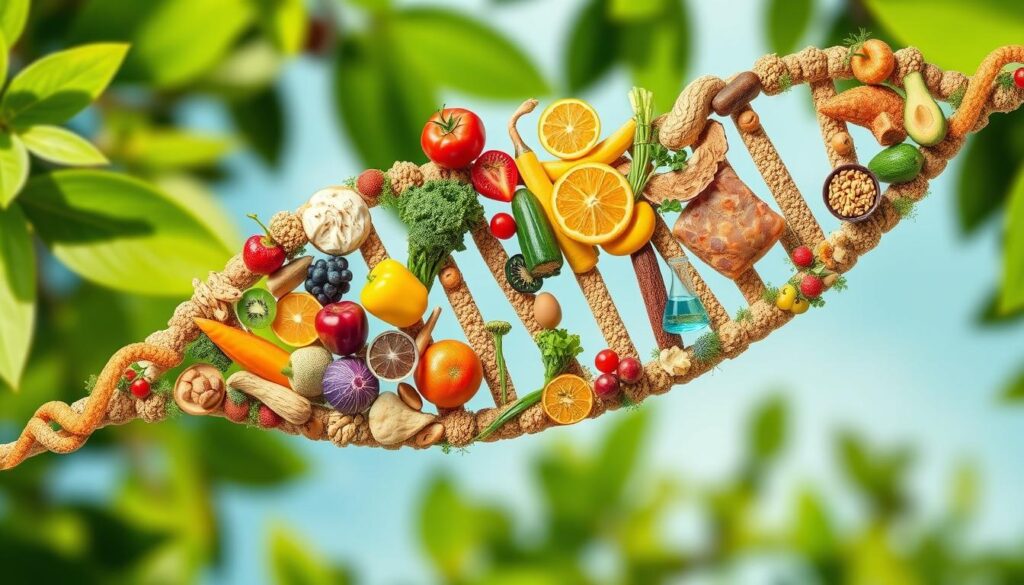
Genetic testing can help me understand food sensitivities, like gluten or lactose issues. It can also tell me about my risk for vitamin D and B12 deficiencies. These are important for staying healthy, even as I get older.
Companies like Nutrigenomix offer tests that give me specific diet advice based on my genes. This shows how genetic info can help me make a diet that boosts my fitness and health.
- Identifying macronutrient preferences based on genetics
- Recognizing food intolerances through genetic insights
- Addressing vitamin deficiencies linked to genetic variations
- Utilizing testing services like Nutrigenomix for tailored recommendations
In the end, a personalized diet based on DNA helps me perform better in fitness and live a healthier life. It lets me make choices that are right for me.
Integrating Lifestyle Choices with Genetic Insights
Understanding how my lifestyle and genes work together is key to better health. Knowing how my behaviors and genes interact helps me make lifestyle choices that fit me best. Things like sleep, stress, and exercise are shaped by my genes, which also affect what I need to eat.
By mixing lifestyle, nutrition, and genetics, I can find a healthier balance. Studies show that 40% to 77% of obesity comes from genetics. This shows how important it is to think about my genes when I make lifestyle changes. Also, nutrigenomic testing can give me diet plans that match my genetic risks, helping prevent and manage chronic diseases.
It’s about seeing how these elements work together. For instance, what I eat can change how certain genes work in my body. This means I look at health in a big picture, not just diet or exercise alone.
The following table shows how lifestyle choices match up with genetic results:
| Lifestyle Factor | Genetic Influence | Health Outcome |
|---|---|---|
| Dietary Habits | Associated SNPs (rs7412, rs429358) | Risk of Alzheimer’s disease |
| Physical Activity | Obesity-related GRS | Weight management |
| Sleep Quality | Circadian rhythm genes | Metabolic health |
| Stress Management | Gene variants affecting cortisol response | Emotional and physical well-being |
With genetic insights, I can make better lifestyle choices for better health. This method can improve my fitness and overall health.
Examples of Nutrigenomic Applications in Sports
Nutrigenomics in sports is changing how athletes perform. Athletes use genetic testing in athletic performance to fine-tune their diets and training. The nutrigenomics market was worth USD 389.4 million in 2020 and is growing fast, thanks to health issues like obesity and heart disease.
About 18.2 million adults in the U.S. have heart disease, showing the need for better diets.
Many pro teams now use genetic info in their training. Nutrigenomic applications improve recovery and tailor nutrition to each athlete’s genes. This approach considers health and lifestyle, key in genetic testing for sports.
Studies show that custom diets can boost performance. The obesity part of the nutrigenomics market is growing fast, showing the value of personalized nutrition. North America leads in nutrigenomics, promising more innovations in sports nutrition.
The Future of Personalized Nutrition
The future of personalized nutrition is changing fast, thanks to nutrigenomics advancements. We’re learning more about how our genes affect what we should eat. This means we’ll soon be able to plan our diets based on our unique genetic makeup.
Genetic testing is becoming more common in the nutrition world. It helps create diets like the Mediterranean or low-carb, based on our genes. This way, we can get the best nutrition for our bodies.
New discoveries in nutrigenomics show how genes and food interact. For example, some genes can affect our risk of getting cancer or heart disease. Scientists are finding new ways that food choices can impact our health.
As we move forward, genetic information will become a key part of our health checks. I think the future of diet planning will let people make better choices. It will also help prevent and manage diseases more effectively.
| Aspect | Current State | Future Direction |
|---|---|---|
| Genetic Testing | Expanding use in nutrition | Personalized diet recommendations |
| Dietary Planning | Generalized approaches | Tailored nutrition strategies based on genetics |
| Health Outcomes | Standard preventive measures | Genetic-driven prevention protocols |
In summary, personalized nutrition is set to change healthcare. We’ll move from one-size-fits-all diets to plans made just for us, thanks to genetic insights.
Challenges in Implementing Nutrigenomic Concepts
Bringing nutrigenomics into practice faces many hurdles. The issues with genetic testing are a big problem. Despite growing interest, people in Malaysia are both interested and cautious about it. A study with 421 adults, including 221 healthcare workers and 200 patients, shows this.
Healthcare professionals’ varying levels of knowledge can make it hard to use nutrigenomics well. This can block effective use of these new ideas.
Most people see the good in nutrigenomics, but they want to know their data is safe. In Malaysia, many health problems like obesity are common. This makes it clear we need to get nutrigenomics right.
Healthcare workers need good training to deal with the tough parts of genetic testing. This is key to helping patients.
Privacy worries are a big issue in nutrigenomics. To move forward, we need training, clear rules, and open talks. Building trust is key to getting more people involved.
| Challenges | Description |
|---|---|
| Complexity of Genetic Testing | Understanding and interpreting genetic data can be challenging for both patients and healthcare providers. |
| Cost of Analyses | Financial constraints can limit access to genetic testing and related services. |
| Varied Understanding Among Professionals | Differing levels of education and experience can create gaps in knowledge about nutrigenomics. |
| Ethical Considerations | Concerns about data privacy and security can lead to hesitance in adopting genetic testing. |
| Training Needs | Healthcare providers require ongoing training to stay updated on best practices and technologies. |
Conclusion
Nutrigenomics is key to improving fitness through personalized nutrition. It helps me understand how my genes affect my diet. This knowledge lets me make choices that boost my performance and health.
It’s interesting to see how nutrigenomics identifies genes linked to diet-related diseases. This makes it easier to tailor my nutrition for better health and sports performance.
As nutrigenomics grows, I can use strategies that fit my genetic needs. This ensures I get the right nutrients for me. By following these principles, I can make better dietary and lifestyle choices. This approach maximizes the benefits of personalized nutrition.
Nutrigenomics has a big impact, helping with both sports performance and chronic diseases. By using its insights, I can change my health and fitness journey. I’m on a path to reach my goals in a smarter and more informed way.