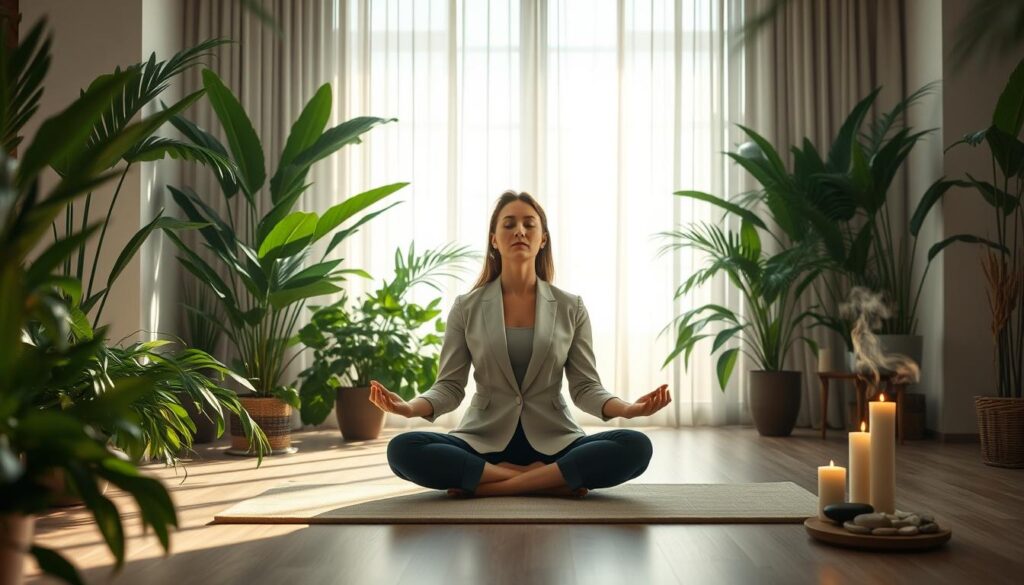
Have you thought about how breathing could improve your health and well-being? Pranayama, a yoga practice, shows the power of breathwork on lung health and energy. For over 5000 years, people have used breath control to boost their health and mood.
Recently, with global health issues like Covid-19, breathing techniques have become even more important. They help keep our lungs healthy. Regular Pranayama practice can make our lungs stronger and our breathing more efficient. This makes it key for overall health.
Yoga breathing exercises also help remove toxins and improve oxygen intake. They make us feel more physically strong. These practices also reduce stress and anxiety, helping our bodies stay strong against outside pressures.
Many modern health problems come from stress and shallow breathing. Pranayama offers a way to improve lung function and live a healthier life.
Key Takeaways
- Pranayama has been practiced for over 5000 years, showing its lasting benefits.
- The practice became more popular during the Covid-19 pandemic for better lung health.
- Regular Pranayama practice can improve lung capacity and remove toxins.
- Breath control helps correct shallow breathing, improving respiratory function.
- Pranayama is effective for reducing stress, increasing energy, and promoting overall well-being.
Understanding Pranayama
What is Pranayama? It’s an ancient practice of breath regulation from Sanskrit. It combines “prana” meaning life force and “yama” meaning control. This technique helps regulate breath, linking body and mind for balance and calm.
Pranayama fits into yoga sessions or can be done alone. It’s for everyone, no matter your skill level. It’s the fourth limb of Ashtanga Yoga, showing its key role in wellness.
Research shows Pranayama’s importance for lungs. Short-term practice boosts breathing and lung function. It also improves reaction times and breathing endurance. For those with COPD, it helps with health and disease severity.
In short, Pranayama is a mix of physical and mental health. It’s great for lung health and overall well-being.
What is the Importance of Pranayama for Lungs?
Pranayama is key for lung health and overall well-being. It boosts respiratory efficiency and strengthens muscles. It also cleanses airways and improves lung capacity.
Techniques like diaphragmatic breathing and Khand Pranayama enhance lung health. They help in better oxygen uptake and circulation. This leads to improved health and immunity.
Pranayama also focuses on breath control. Techniques like Bhramari and Ujjayi manage stress and anxiety. They improve mental health and reduce high blood pressure, showing the value of breath control.
Yoga and Pranayama also support traditional rehabilitation, like for COPD. Studies show they improve lung function and quality of life. Regular practice boosts lung health and overall well-being, highlighting Pranayama’s benefits.
The Connection Between Breath and Wellness
The connection between breath and health shows how breathing can change our well-being. By practicing Pranayama for healthy breathing, I’ve seen big changes in my body. Deep breathing improves oxygen flow and brain function, reducing stress.
This leads to better emotional balance and mental clarity. It shows the benefits of breathing techniques in our daily lives.
Studies back up the benefits of Pranayama for both mental and physical health. It helps with blood pressure and cholesterol, improving heart health. It also helps with anxiety and stress, showing its role in mental health.
By adding these practices to my routine, I see how breathing connects to overall wellness. It changes how I handle stress, showing that breath is key to thriving, not just surviving.
Benefits of Pranayama for Lung Health
Pranayama is great for lung health and is a key part of my wellness routine. It helps improve my breathing and overall health.
Strengthens Respiratory Muscles
One big benefit of Pranayama is that it makes the muscles for breathing stronger. Regular practice tones muscles like the diaphragm, making them work better. This leads to better lung health.
Increases Lung Capacity
Pranayama helps increase lung capacity through controlled breathing. It allows for deeper breaths, using oxygen better and removing carbon dioxide. Studies show lung function can improve in just a few weeks, which is great for people with breathing problems.
Removes Toxins from the Respiratory System
Pranayama is also good at cleaning the lungs. It helps remove dust and toxins that can build up. This makes the lungs healthier and improves breathing for people with lung diseases.
How Pranayama Improves Breathing Patterns
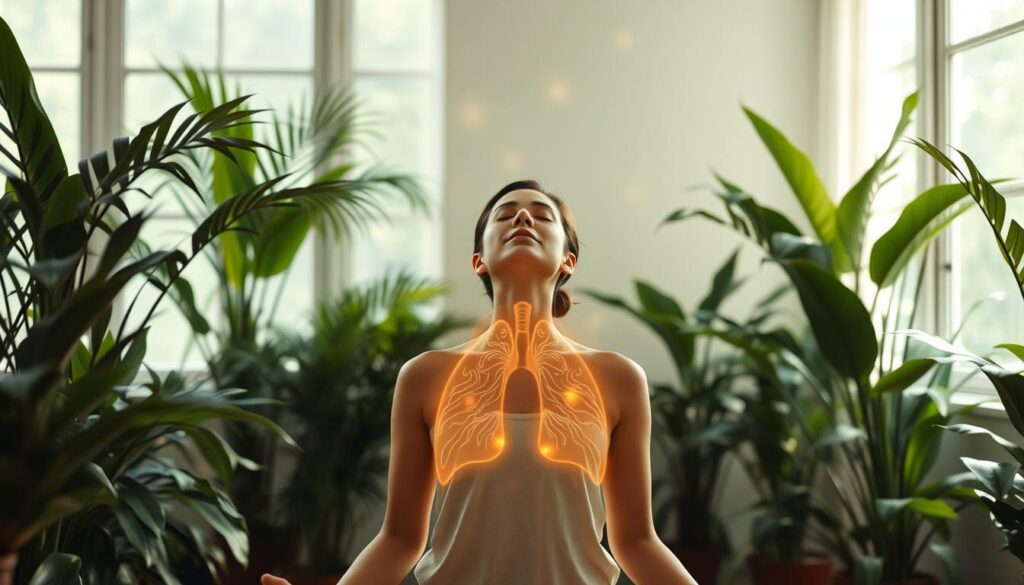
Pranayama helps us breathe better. It teaches us to manage our breathing. Many of us breathe shallowly due to stress and our busy lives. By learning new techniques, we can breathe deeply and mindfully. This boosts our lung capacity and improves our breathing.
Correcting Shallow Breathing
Shallow breathing is common and can make us feel tired. Pranayama teaches us to use our diaphragm for deeper breaths. This fills our lungs fully, improving oxygen intake and lung function. Studies show Pranayama helps those with breathing problems.
Engaging the Diaphragm Effectively
Using the diaphragm is key for better breathing. When we use it right, our lungs expand fully. This improves airflow and lung capacity. It also boosts our physical and mental health. Research shows Pranayama lowers stress and improves heart function.
Pranayama Techniques for Respiratory Health
Pranayama techniques can greatly improve your lung health. These exercises help your lungs work better and increase their capacity. This leads to better overall health. Let’s look at some top Pranayama techniques for your lungs.
Alternate Nostril Breathing (Nadi Shodhana)
Alternate Nostril Breathing, or Nadi Shodhana, cleanses your nasal passages and boosts lung capacity. It balances your body’s energy, acting as a purification practice. Regular practice improves your lung function, making it a top choice for lung health.
Bellows Breathing (Bhastrika)
Bellows Breathing, or Bhastrika, energizes and detoxifies your body. It involves deep inhalation and exhalation. Studies show Bhastrika is better than running for lung function, making it a top breathing exercise for lung health.
Oceans Breathing (Ujjayi)
Oceans Breathing, or Ujjayi, calms your mind and body. It improves lung function and boosts oxygen supply. This technique helps you relax and enhances your breathing, supporting overall well-being.
| Pranayama Technique | Benefits | Recommended for |
|---|---|---|
| Alternate Nostril Breathing (Nadi Shodhana) | Cleanses nasal passages, balances energy | Overall respiratory enhancement |
| Bellows Breathing (Bhastrika) | Detoxifies, enhances lung capacity | Athletes and individuals seeking energy boost |
| Oceans Breathing (Ujjayi) | Improves lung function, induces relaxation | Stress relief and calming anxiety |
Adding these Pranayama techniques to your daily routine can greatly improve lung health. These exercises help you connect with your body and its functions. Regular practice can reduce respiratory problems and improve long-term lung health.
Pranayama for Lung Health: Techniques Overview
Pranayama techniques can greatly improve lung health. Two key methods are Humming Bee Breath and Frontal Lobe Cleansing. Each targets different areas of respiratory health and mental clarity, providing unique benefits.
Humming Bee Breath (Brahmari)
The Humming Bee Breath, or Brahmari, involves making a humming sound while exhaling. It boosts lung capacity and reduces stress. The vibrations help increase oxygen intake, benefiting lung health.
Many people find it improves emotional well-being and lowers anxiety. Regular practice is key to these benefits.
Frontal Lobe Cleansing (Kapal Bhati)
Kapal Bhati focuses on quick, forceful exhalations followed by passive inhalations. It’s known for cleansing the respiratory system and increasing lung capacity. Practicing Kapal Bhati purifies the lungs and engages the mind.
It’s a powerful exercise for both body and spirit. It also improves cognitive function and energy levels.
| Technique | Main Focus | Benefits |
|---|---|---|
| Brahmari | Promoting relaxation | Increases lung capacity, reduces stress and anxiety |
| Kapal Bhati | Active exhalations | Cleanses respiratory system, boosts lung capacity, enhances cognitive function |
Adding these techniques to your routine can enhance respiratory health and overall well-being.
Research on Pranayama and Lung Function
Research shows Pranayama boosts lung function across different groups. Studies prove it increases lung capacity and improves breathing health. It benefits both athletes and non-athletes, showing its wide-ranging advantages.
Studies Supporting Improved Lung Capacity
Studies link lung function to long-term health, with a 29-year study showing its importance. Pranayama has been shown to enhance breathing rates and lung health. It also affects heart and lung functions positively.
Impact on Athletes and Non-Athletes Alike
Research shows lung function varies among athletes, yogis, and sedentary people. Yoga boosts chest expansion and lung volume, improving breathing health. In athletes, efficient breathing is linked to better race times. This shows Pranayama’s wide benefits for lung health and wellness.
| Study | Findings |
|---|---|
| Buffalo Health Study | Pulmonary function as a predictor of mortality |
| Joshi et al. (1992) | Short-term Pranayama effects on breathing rate |
| Amte et al. (2014) | Pranayama’s effects on shooting performance |
| American Lung Association | Testing yoga breathing for COPD patients |
| Shankarappa et al. (2012) | Examined short-term effects on lung parameters |
Incorporating Pranayama into Daily Life
Adding Pranayama to your daily routine is key to enjoying its benefits. A regular Pranayama practice helps you breathe deeply. Choose a time, like morning or evening, for focused breathing. This boosts your mindfulness and emotional health.
Pranayama activates your body’s calm system, lowering stress hormones. This makes you feel more relaxed.
Creating a Routine
Creating a Pranayama routine is vital for better lung health. Start with a few minutes each day to practice different techniques. This improves your breathing and lung capacity, boosting your health.
For those with COPD, Pranayama can significantly improve lung function. Regular practice helps manage symptoms and improves life quality. It’s not a replacement for medication, though.
Mindfulness Practices with Pranayama
Pranayama is not just for set practice times. Using it during breaks or while commuting can be a great stress reliever. It sharpens your focus and mental clarity, helping you make better decisions and stay emotionally balanced.
By making Pranayama a part of your life, you discover more about yourself. It improves your circulation and oxygen use in your body.
Challenges in Practicing Pranayama
Practicing Pranayama can be tough. Getting the breathing right is often a big challenge. Distractions can make it hard to focus, leading to problems with lung health exercises.
Knowing the common breathing issues can help. Feeling uncomfortable during exercises can stop people from practicing regularly. Studies show that focusing on breathing can change how we feel, helping with emotional control.
Not having the right guidance can also cause problems. Different breathing methods have different effects on the body, as Telles et al. (1991) found. Working with trained teachers can help understand Pranayama better, overcoming lung health obstacles.
This knowledge can help make breathing exercises more effective. Novaes et al. (2020) found that yoga breathing can reduce anxiety and improve brain connections, encouraging people to keep practicing.
Conclusion
Pranayama is key for better lung health and overall wellness. By adding specific breathing techniques to my daily life, I’ve seen big improvements. These include better lung capacity, less stress, and more mindfulness.
This isn’t just about breathing better. It’s about living a healthier, more balanced life. The benefits of Pranayama are clear.
My thoughts on lung health are simple: keep practicing. Studies show that breathing techniques like alternate nostril breathing can boost lung and heart health. This ancient practice has amazing effects.
I urge everyone to try Pranayama and see the positive changes in their life. It’s a powerful way to improve well-being.
Pranayama’s impact goes beyond lung health. It also boosts mental clarity and emotional strength. By sticking with it, I’ve found a deeper sense of vitality and harmony.