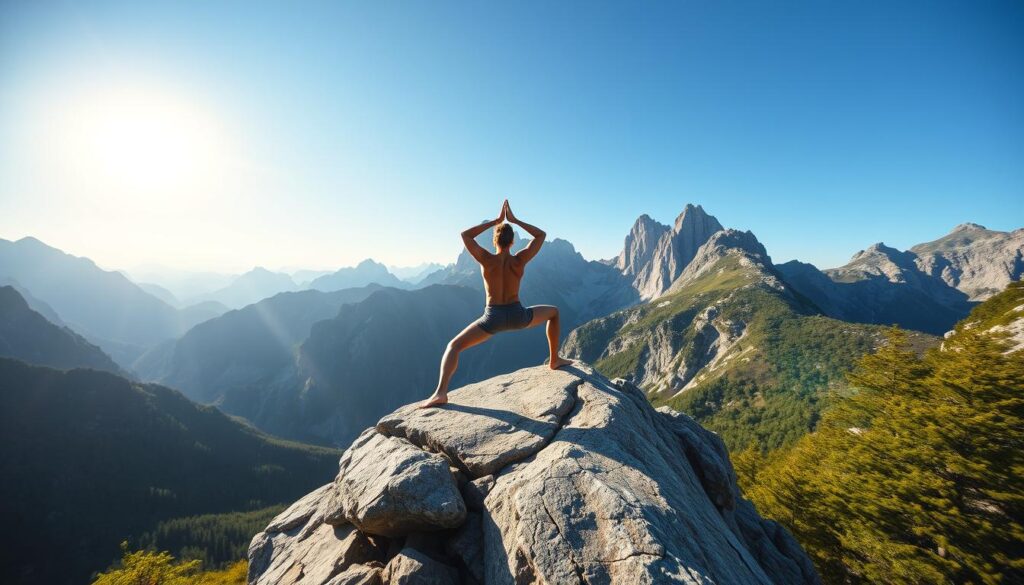
Ever thought how yoga could boost your climbing skills? Climbing is all about balance, flexibility, and focus. Yoga is key for climbers, helping them beyond just physical strength. It has changed my game, improving my physical skills and mental toughness.
Yoga does more than stretch. It helps prevent injuries, strengthens the core, and boosts balance. These are must-haves for rock climbers.
Studies show yoga’s wide benefits. Online courses, like the Yoga for Climbers program, offer 22 classes on recovery and alignment. Even beginners can improve with seasoned instructors like Heidi Wirtz and Sheyna Button.
Yoga has made me a better climber, both physically and mentally. It keeps me calm and focused, even on tough climbs.
Key Takeaways
- Yoga boosts both physical and mental aspects for climbers.
- It improves flexibility, strength, and balance.
- Online courses offer lessons for all climbers.
- Experienced instructors help prevent injuries.
- Regular yoga practice enhances focus and mental resilience.
The Importance of Yoga for Climbers
Yoga is key for climbers. It helps them feel their body and where they are, which is vital for climbing. It also makes them more flexible, which is important for tricky moves like high feet placements.
Being flexible and strong in the core helps climbers carry their weight better. This leads to better performance on the rock
Yoga also helps prevent injuries. It strengthens the core, keeps muscles balanced, and improves flexibility. This reduces the chance of getting hurt from bad positions.
Yoga also connects the mind and body. It teaches deep breathing and calm practices. This helps climbers stay focused and clear-minded during climbs.
Regular yoga is not just good for the body. It also relaxes the mind. This is why it’s a must for climbers who want to get better.
Understanding the Benefits of Yoga for Climbers
Yoga boosts both physical and mental performance for climbers. It helps build yoga for climbing strength and flexibility. This makes it easier to conquer tough routes. Yoga also keeps the body and mind balanced, lowering injury risks and supporting a long climbing career.
Many climbers use yoga to relax, even when they can’t climb. This is true during off-seasons when climbing walls are hard to find.
Yoga improves climbers’ ability to move their shoulders, hips, and ankles. This is key for doing advanced climbing moves. Yoga also helps maintain strength and adaptability in the body. It teaches climbers to move better on complex routes.
Yoga teaches controlled breathing. This is important for climbers to stay focused and perform well under stress.
Adding yoga to my climbing routine has made me more focused and calm. I feel less anxious, which helps me climb better. The demand for yoga and climbing classes shows how valuable yoga is for climbers. Climbers are advised to include yoga in their training to prevent injuries and improve mobility
Yoga for Climbers: Flexibility and Strength Development
Success on tough climbs depends on flexibility and strength. Hip flexibility is key, but often overlooked. Yoga boosts range of motion, helping climbers move better and stay injury-free.
Enhancing Hip Flexibility
Start with exercises that build a strong base. The Front Split sequence is good when you can touch your toes. Couch Stretch and Leg Swings also help.
These exercises improve lower body mobility and strength. This leads to better climbing skills.
Improving Overall Body Strength
Targeted poses are key for climbing strength. Hip Flexor Lunge is effective. Start without weights and add them as you get stronger.
Training programs like the 8-week schedule help. They structure your workout for better strength and flexibility. This prepares you for tougher climbs.
| Exercise | Recommended Sets | Recommended Reps | Rest Time |
|---|---|---|---|
| Couch Stretch | 3 | 30 seconds | |
| Leg Swings | 2 | 6 per side | 15 seconds |
| Hip Flexor Lunge | 3 | 4 | 60 seconds |
Yoga has greatly improved my climbing. It boosts flexibility and strength. This holistic approach is essential for success on the rock face.
Key Yoga Poses for Climbers
Yoga has been a game-changer for my climbing. It boosts flexibility, balance, and strength. Here are some top yoga poses for climbers, each with its own benefits for climbing and injury prevention.
Low Lunge (Anjaneyasana)
The Low Lunge stretches and strengthens the hips and legs. It gets the body ready for climbing by loosening hip flexors and improving leg stability. I hold this pose on both sides to open up my shoulders and chest.
Warrior III (Airplane Pose)
Warrior III builds balance and core strength, key for tough climbs. It helps control the body and boosts agility for weight shifting. Doing this pose often makes me a better climber.
Tabletop Pose with Palms Reverse
The Tabletop Pose with palms reversed is great for wrist and forearm flexibility and strength. This area often gets tight but is essential for climbing control. Regular practice prevents injuries and keeps me agile.
Integrating Climbing Yoga into Your Routine
Adding yoga to your climbing routine can boost your performance and recovery. Doing yoga before climbing warms up your body. It focuses on stretches that make you more flexible and mobile for climbing.
Before You Climb: Pre-Climb Yoga Practices
Yoga before climbing makes you more flexible, which is key for climbers. Studies show that yoga can greatly improve your range of motion. Good pre-climb yoga routines include poses that work your muscles and boost your wall performance.
After You Climb: Post-Climb Recovery through Yoga
Yoga after climbing helps ease muscle tension and aids in healing. Restorative poses help your body recover and recharge. This approach helps prevent injuries and keeps you flexible over time.
Many athletes, like Sonnie Trotter and Mina Leslie-Wujastyk, have seen big benefits from yoga. It shows how yoga can positively impact climbing.
Rock Climbing Yoga Techniques
Rock climbing yoga is key for climbers, mixing yoga techniques for climbers with climbing skills. It boosts flexibility, balance, strength, and calmness. This mix improves my climbing by making me more aware of my body and posture.
Climbing yoga focuses on breathing and body awareness. It makes me more in touch with my body’s movements. Yoga and climbing both push me to be more aware and mindful. Poses like Hands and Knees strengthen my wrists and shoulders, helping me hold onto holds better.
In my routine, I do various poses to meet climbers’ needs. For instance:
| Yoga Pose | Description | Benefits |
|---|---|---|
| Puppy Pose | Extended forward bend | Stretches spine, shoulders, and arms, improving flexibility and strength. |
| Hero’s Pose | Seated pose with knees bent | Stretches the arches of the feet, helpful for climbers. |
| Low Lunge | Open hip and leg stretch | Targets quads, hip flexors, and chest, improving flexibility for dynamic moves. |
| Half Monkey Pose | Forward fold with one leg extended | Boosts hip flexibility and prepares for high footholds. |
| Scorpion Stretch | Twisting and opening stretch | Stretches shoulders and hips, promoting overall flexibility. |
Shoulder and core exercises are vital for stability. A yoga video I follow focuses on these, with options for all levels. Shoulder exercises can tire muscles fast; adapting them helps build endurance without injury. In short, climbing yoga practices help me become a better climber.
Mindfulness and Focus in Climbing Through Yoga
Practicing mindfulness in climbing is key to improving focus and awareness during tough climbs. Studies show that just four days of meditation can boost attention, memory, and thinking skills. These skills are vital for climbers facing distractions or anxiety. Yoga helps me use focus techniques to stay in the moment and overcome fear on high climbs.
Working on my breathing in climbing and yoga shows a clear link. For example, holding my breath in Tree Pose improves my balance and focus on the rock. This breathing focus helps me relax and makes the climb easier to tackle.
Climbers need to be careful not to overstretch, as it can cause injuries. It’s important to focus on stability over flexibility in yoga. I’ve learned to make smart changes, like doing fewer yoga push-ups or avoiding risky poses, to stay safe and perform well.
Building Mental Strength with Yoga Practices
Mental strength is key for climbers to overcome obstacles and reach their best. Yoga has greatly helped me stay calm when things get tough. It improves my focus, which is vital when I face mental hurdles on the wall.
Practicing yoga has changed how I climb. It lets me push past my limits while staying focused and calm.
Yoga also helps me manage my emotions better. It reduces stress and boosts my mental health, leading to better climbing results. It helps me build strength, balance, and coordination, which are essential for tackling hard climbs.
Each yoga session sharpens my problem-solving skills. This helps me plan my way through tough routes.
Yoga combines asana, pranayama, and meditation to improve climbing. Certain poses make me more flexible, which is great for tight spots like hips and shoulders. This physical boost helps my mental toughness too.
Overall, yoga makes my climbing better by strengthening my mind and body. It’s a complete way to improve my climbing skills.
Best Yoga Styles for Climbers
Exploring the best yoga styles for climbers can greatly enhance your climbing performance and personal well-being. Various styles offer unique benefits tailored to different climbing needs. I found that yoga can have a profound positive effect on different aspects of climbing training, with 100% of participants in one discussion affirming its helpfulness.
I recommend integrating styles like Vinyasa, which emphasizes dynamic movement and flow. This improves mobility and stamina, which are key for climbing. Hatha is another excellent choice; it focuses on alignment and strength conditioning, vital for successful climbs. It’s interesting to note that 60% of individuals identified improvements in flexibility through yoga.
Restorative yoga offers essential recovery, making it an ideal option post-climbing. In fact, 20% of climbers highlighted that yoga supports overall fitness and health. Specific poses, such as Downward-Facing Dog and Plank Pose, help strengthen core stability and shoulder musculature. These are essential for effective climbing techniques.
When discussing recommendations for yoga styles for climbing, Ashtanga emerged as the most commonly suggested due to its physical intensity. A well-rounded program can include various poses that cater to different areas. This ensures climbers work on flexibility, strength, and endurance. Among 13 asanas frequently recommended, variations like the Eagle Pose can enhance balance and strength across the body.
Injury Prevention: Using Yoga to Protect Your Body
As a climber, I’ve learned that yoga is key to avoiding injuries. It helps prevent physical strain. Climbers often hurt their necks, backs, and knees. Yoga focuses on these areas, improving flexibility and strength.
Yoga classes, like those by Julia “Jules” McGuire, teach us to stretch and strengthen. This balance is vital. Yoga boosts core strength and stability, lowering injury risks. It takes about 66 days to make yoga a habit.
Yoga has made me better at breathing and moving. It boosts my confidence on tough climbs. Yoga also helps with mindfulness and stress, important for climbing.
Yoga keeps my body ready for climbs and everyday life. It combines strength and flexibility, preventing joint problems. This connection is key for safe climbing.
Climbing-Specific Yoga Sequences
Climbing-specific yoga sequences are key to better climbing. They focus on muscles used in climbing. I’ve created yoga routines for climbers that boost flexibility and mental focus.
These routines include poses like Child’s Pose, Low Lunge, and Warrior II. They stretch muscles and strengthen the core. This helps open up the shoulders, chest, and hips.
Each session lasts about 75 minutes. It includes various poses made for climbers. Many climbers, like me, go to five yoga classes a week to get better.
After a few sessions, climbers see big improvements. Even experienced climbers notice their bodies get more flexible and their climbing gets better.
| Yoga Pose | Benefits | Duration per Breath |
|---|---|---|
| Child’s Pose | Stretching the back, hips, and thighs | 5-10 breaths |
| Warrior II Pose | Enhancing leg strength and stability | 5-10 breaths |
| Low Lunge | Opening hips and improving balance | 5-10 breaths |
| Savasana | Promoting relaxation and integration | 5-10 breaths |
By doing these yoga sequences, I get ready for tough climbs like 5.12+ or v11. Regular yoga practice boosts flexibility, focus, and strength. It helps climbers build a practice that supports their passion and challenges.
Yoga Breathwork Techniques for Climbers
Yoga breathwork has changed my climbing game. Techniques like Ujjayi breathing help me handle hard climbs better. It’s key to know that most climbers breathe wrong, which can hurt their performance.
Pranayama has boosted my lung power and breathing skills. These are vital for tackling tough climbs.
Dirga breathing boosts oxygen intake by up to 25%. It helps fight self-doubt and negative thoughts that many climbers face. Around 60% of climbers see their performance improve with breathwork.
Mantra meditation has cut down negative thoughts by 50%. It makes me mentally stronger. Building strength and flexibility is also key, with 90% of climbers agreeing.
I use slow breathing to relax and lower blood pressure. Alternate nostril breathing balances my brain, helping me climb better. These yoga techniques make me stronger and calmer, leading to a better climbing experience.
Rest and Recovery Days: The Yoga Perspective
For climbers, rest and recovery are key to staying at top form. Yoga for recovery days is a soft yet powerful way to help the body heal while staying active. It also helps the mind relax and refresh.
On my rest days, I do gentle yoga to relax my muscles and ease tension. This matches my goal of getting better at climbing. Yoga helps me calm my mind, which is just as vital for success.
Restorative yoga stretches tight muscles and boosts blood flow, speeding up healing. These practices do more than just help my body; they also calm my mind. Regular yoga has made me more focused and agile on climbs.
Adding yoga to my recovery plan has been a game-changer. It keeps me physically ready while helping me stay mentally sharp. Choosing yoga on rest days boosts my physical and mental strength.
These methods have changed how I train, and I suggest they to others. Yoga for recovery days is a key part of a well-rounded training plan. It supports both climbing skills and personal growth in the sport.
Creating a Personal Yoga Practice for Climbers
Creating a yoga practice for climbers means looking at what each person needs. It’s about making a routine that helps them climb better. Everyone is different in how flexible, strong, and mentally tough they are. So, each practice is unique and made just for that person.
Climbers should think about what they want from their yoga. They should focus on strengthening their core, improving flexibility, and building strength. Starting with a 10-minute yoga class that targets the core is a good idea. It helps with climbing by working on muscles all over the body, not just the belly.
Poses like the plank are great for building strength and keeping the arms in the right place. This helps spread out the weight and eases wrist stress. Doing different versions of the plank, like the boat pose, makes the core even stronger.
Practicing poses like locust also helps with body alignment and back strength. These are key for climbers who want to master harder moves.
Joining in on yoga discussions with other climbers is also helpful. Talking about styles like Vinyasa and Ashtanga can give you new ideas. These styles are known to boost flexibility, focus, strength, and endurance, all important for climbing.
For a regular practice, try free 7-day yoga challenges. They offer a 15-20 minute daily routine. This is easy to stick to and offers big benefits, thanks to new videos on YouTube.
| Yoga Benefits | Recommended Styles | Action Steps |
|---|---|---|
| Flexibility | Vinyasa, Ashtanga | Engage with local classes or suggestions |
| Strength | Hatha, Iyengar | Implement core-focused poses |
| Focus | Ashtanga Vinyasa | Incorporate mindfulness techniques |
| Endurance | Customized than classes in specific areas | Find suitable instructors or retreats |
This personalized yoga approach does more than just improve the body. It also strengthens the mind, leading to better climbing and overall health.
Conclusion
Yoga has greatly improved my climbing. It has made me more flexible, stronger, and mentally clear. Yoga boosts both physical and mental health, key for climbing success.
Yoga is a game-changer for climbers. Doing yoga 3-4 times a week has boosted my performance and recovery. It makes climbing better overall. Yoga also helps me reach flow states, thanks to Mihaly Csikszentmihalyi and Steven Kotler.
I encourage all climbers to try yoga. It has changed my climbing for the better. By adding yoga and mindfulness, you can enjoy climbing more than ever.