FITNESS EDDY / RECOVERY & MOBILITY
Choose the right band for your goal, not just the cheapest one.
Four picks from $11.78 to $68.26, matched to hip and glute work, everyday mobility, standing leg training and strength rebuilding.
SHOP RECOVERY & MOBILITY GEAR Updated September 2026
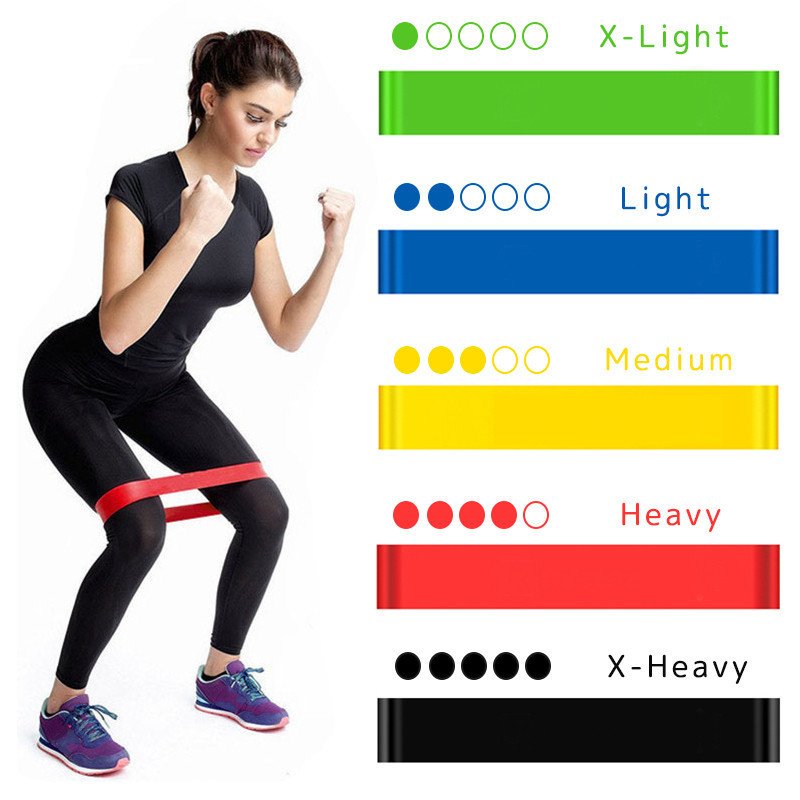
Short answer: the best resistance bands for rehab depend on what you are working on. Start with a light loop band. A hip loop band (Hip Resistance Band, from $11.99) suits glute and knee-stability work, and a multi-color loop set (Rally Loop, from $11.99) covers warm-ups and general mobility. Move to ankle-strap tubes for standing leg work, or a handle-and-pedal system once you are cleared to rebuild strength.
Recovering from an injury or surgery? Let your physical therapist or doctor set your exercises and resistance level. This guide helps you choose the gear. It does not diagnose or treat anything.
Quick picks: which band for which goal?
| Your goal | Best pick | From |
|---|---|---|
| Warm-ups and general mobility | Rally Loop Yoga Resistance Band | $11.99 |
| Hip, glute and knee-stability work | Hip Resistance Band (TPE) | $11.99 |
| Standing leg and glute work | Ankle Strap Resistance Bands | $11.78 |
| Rebuilding strength after rehab | Adjustable Tension Bands with Foot Pedals & Handles | $68.26 |
Which resistance band fits your situation?
- I want to warm up before lifting or running: a light multi-color loop set.
- My hips or knees feel unstable: a hip loop band, starting at the lightest thickness.
- I want to train legs and glutes standing up: ankle-strap tubes.
- I am past the pain and want to build strength again: a handle-and-pedal system.
- I have a latex allergy: choose the TPE hip band and confirm the material on any listing before you order.
The 4 best resistance bands for rehab, recovery & mobility
Prices in the cards update live. Choose your resistance level or color set on each product page.
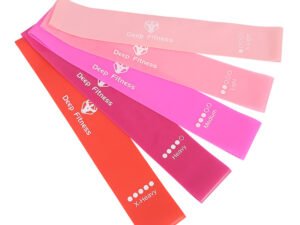
1. Best for warm-ups & general mobility: Rally Loop Yoga Resistance Band
Rated 5.0 across 92 customer reviews, this is the most-reviewed band in our recovery range. It is a compact loop built for hip activation, stretching and light strength work, small enough to live in a gym bag.
- Choose: the 5-color set if you are unsure of your level. Options run $11.99 to $24.99, and a set gives you a resistance range in one purchase.
- Skip it if: you want heavy resistance. This is a mobility and light-strength band.
-
Rally Loop Yoga Resistance Band – Premium High-Tensile Fitness Band & Strength Training Loop to Pinterest (opens in a new window)Price range: $11.99 through $24.99
Rally Loop Yoga Resistance Band – Premium High-Tensile Fitness Band & Strength Training Loop
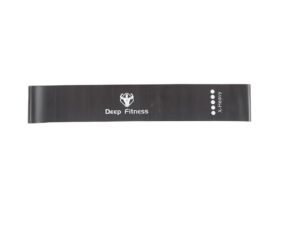
2. Best for hip, glute & knee-stability work: Hip Resistance Band
A TPE loop that the listing describes as non-slip and non-rolling through lateral walks and squats. Rated 5.0 across 36 reviews. Hip and glute strengthening is a common band routine in rehab and injury-prevention programs.
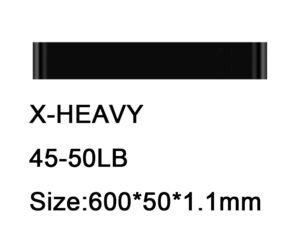
- Choose: the thickness by color. 0.4 mm green is the lightest, then 0.6 mm blue, 0.8 mm yellow, 1.0 mm red and 1.2 mm black. Multi-band sets are also available.
- Skip it if: you need handles or upper-body work.
-
Hip Resistance Band – Premium TPE Lower Body Exercise Ring & Yoga Stretching Loop to Pinterest (opens in a new window)Price range: $11.99 through $17.99
Hip Resistance Band – Premium TPE Lower Body Exercise Ring & Yoga Stretching Loop
3. Best for standing leg & glute work: Ankle Strap Resistance Bands
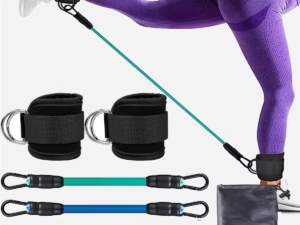
Cuffs at the ankle let you train kickbacks, leg lifts and hip abduction against tube resistance, which is useful when a loop around the knees is not the movement you need. Options include 3-tube sets rated 10 to 30 lb, so you can progress without buying again.
- Choose: the 3-tube 10 to 30 lb set if you want room to progress.
- Skip it if: your ankle itself is what you are rehabbing. The cuff sits on it, so ask your therapist first.
-
Ankle Strap Resistance Bands – Leg & Hip Strength Training for Home, Yoga, Pilates, and Gym Workouts to Pinterest (opens in a new window)Price range: $11.78 through $22.99
Ankle Strap Resistance Bands – Leg & Hip Strength Training for Home, Yoga, Pilates, and Gym Workouts

4. Best for rebuilding strength: Adjustable Tension Bands with Foot Pedals & Handles
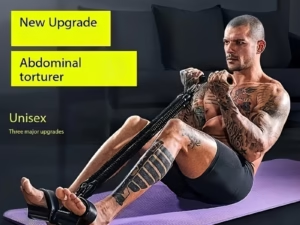
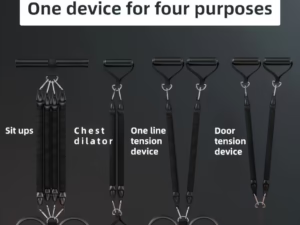
A handle-and-pedal system listed at 100 lb, for when the movement is pain-free and you are cleared to add load. Handles and foot pedals make it suitable for full-body moves like rows, presses and squats, and the listing highlights home and travel use.
- Choose: this once bands 1 or 2 feel easy and your provider agrees you can progress.
- Skip it if: you are in early-stage rehab or only need mobility work. 100 lb is more than most rehab needs, so start with pick 1 or 2.
Why shop resistance bands at Fitness Eddy?
Loop, tube and handle systems in one place, in multiple resistance levels.
Free US shipping keeps the decision simple.
A 30-day money-back guarantee on eligible orders.
How to choose your resistance level
- Use the 12 to 15 rep test. Pick the level where 12 to 15 slow, controlled reps feel challenging at the end but stay pain-free.
- Move up when it gets easy. If 20 reps feel easy, go up one level. If your form breaks or anything hurts, go down one.
- Start at the light end. On the hip band, that means 0.4 to 0.6 mm.
- Buy a set if you are unsure. It costs less than replacing a band that turns out too light or too heavy.
Standard resistance band color guide
Across the resistance band industry, color is commonly used as a shorthand for tension level, though exact resistance can vary by brand and band width. As a general reference:
| Color | Typical level | Common use |
|---|---|---|
| Yellow / Green (light) | Extra light – light | Early-stage rehab, seniors, shoulder work |
| Red / Blue (medium) | Medium – medium-heavy | General mobility, hip and glute activation |
| Black / Silver (heavy) | Heavy – extra heavy | Strength rebuilding, advanced training |
Always check the specific listing for that band’s actual resistance range — color conventions are not standardized across every brand, though the Cleveland Clinic confirms the general pattern of darker colors meaning more tension.
Loop band or tube band: which do you need?
| Type | Best for | Watch out for |
|---|---|---|
| Loop band | Hip and glute activation, warm-ups, stretching, travel | Not built for heavy pulling |
| Tube band with cuffs or handles | Standing leg work, upper-body pulls and presses, higher resistance | Needs a stable setup and a comfortable cuff or grip |
3 simple band exercises to start with
- Banded glute bridge: loop just above the knees, feet flat, press the knees gently outward as you lift your hips. 2 sets of 12.
- Clamshell: lie on your side with knees bent and the band above the knees. Lift the top knee without rolling your hips back. 2 sets of 12 per side.
- Lateral band walk: soft knees, band above the knees, small side steps with toes forward. 2 sets of 10 steps each way.
Two to four sessions a week is a common starting point for general mobility work. These are general fitness moves. If you are rehabbing a specific injury, follow your therapist’s plan.
Resistance bands vs. free weights for rehab
Bands add resistance smoothly as they stretch, which many people find gentler on joints than free weights. A 2019 study cited by the Cleveland Clinic found that resistance band training produced strength gains comparable to conventional gym equipment. Hospital for Special Surgery physical therapists note that bands give a joint continuous feedback through its full range of motion, which can mean less stress on painful joints than a fixed-direction load like a dumbbell.
Weights typically come in later, once strength and pain-free range of motion are back — Mass General Brigham outlines a similar band-first progression for building strength safely. You do not have to choose one or the other: many people keep a band in their routine as a warm-up even after they return to heavier lifting.
Before you click Add to Cart
- Name the movement or goal you are buying for.
- Pick loop or tube to match it.
- Choose the lightest level that passes the 12 to 15 rep test, or a set if unsure.
- Check the material on the listing if you have a latex allergy.
- Confirm current price and delivery details on the product page.
How we picked these bands
We selected these four from Fitness Eddy’s Recovery & Mobility catalog based on verified customer ratings and review volume (where available), the specific rehab or mobility use each band is built for, and resistance-level range. Our goal with this guide is to help you compare real resistance bands for rehab, recovery and mobility side by side before you buy. We are a retailer, not a medical provider — this guide is meant to help you compare gear, not replace guidance from your physical therapist or doctor.
Frequently asked questions about resistance bands for rehab
Are resistance bands good for rehab?
Yes. Bands give smooth, adjustable resistance that is easy on joints, which is why they are common in physical therapy. Follow your therapist’s plan for your specific injury.
What resistance should I start with?
The lightest level that lets you finish 12 to 15 slow, pain-free reps. Move up only when 20 reps feel easy.
What is the best resistance band for physical therapy?
A light loop band for lower-body and mobility work. Add a tube set once your therapist progresses you.
Can resistance bands help with knee pain?
Stronger hips and glutes often support the knee, and hip loop bands are a common tool for that. Ongoing knee pain needs a professional assessment.
How often should I use resistance bands?
General mobility and activation work is often done 2 to 4 days a week. Rehab programs should follow your provider’s schedule.
Should I buy a loop band or a tube band?
Loop bands suit hips, glutes and warm-ups. Tube bands with cuffs or handles suit standing leg work and upper-body pulls.
How long do resistance bands last?
Several months of regular use. Replace any band that is cracked, thinning or losing snap, because it can break mid-exercise.
Is there a latex-free option?
The Hip Resistance Band is made from TPE. Check the material on any listing before ordering if you have a latex allergy.
Does Fitness Eddy offer free US shipping?
Yes. Confirm current terms on the product page.
Sources
Ready to build your recovery routine?
Pick the band that matches your goal, start light, and add resistance as you progress.
More from Fitness Eddy: Weights & Resistance · Yoga & Pilates Gear · Best Home Gym Equipment
This article is for general fitness information and is not medical advice. Consult a qualified healthcare professional before starting any rehab or exercise program, especially after an injury or surgery.