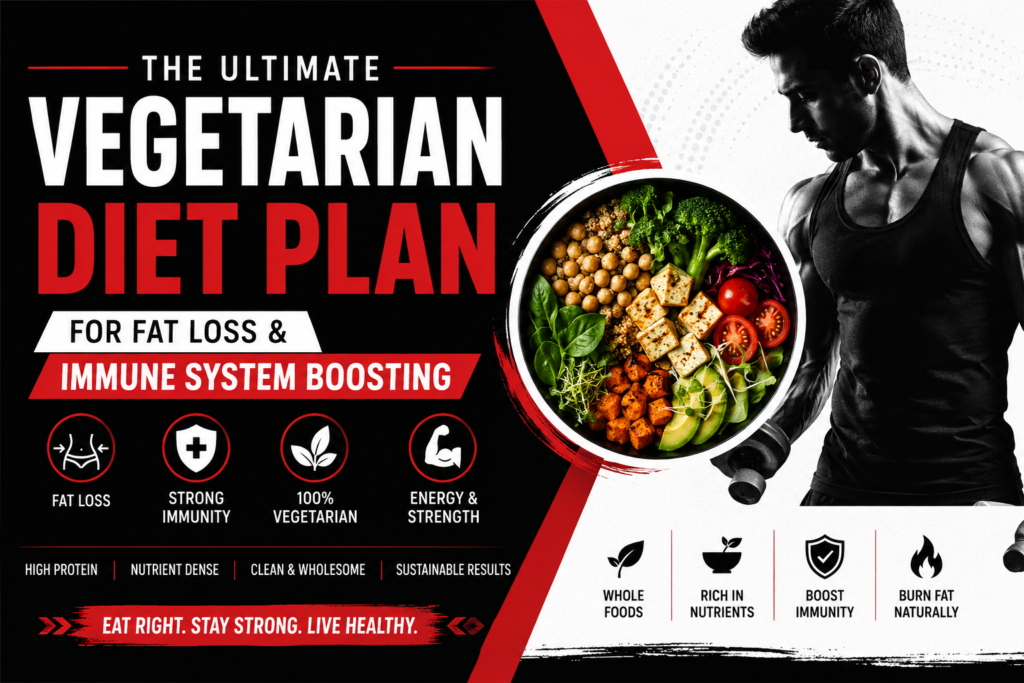
The ultimate vegetarian diet plan for fat loss and immune system boosting
A well-designed vegetarian diet can be excellent for both fat loss and immune support if it prioritizes high protein, whole foods, healthy fats, and a wide variety of colorful fruits and vegetables.
Core Principles
- Eat 30–40 g of protein at each main meal.
- Create a moderate calorie deficit (about 300–500 calories/day) for steady fat loss.
- Fill half your plate with vegetables.
- Choose whole grains over refined carbohydrates.
- Drink 2.5–3.5 liters of water daily.
- Sleep 7–9 hours and exercise regularly.
Morning (Upon Waking)
- 500 mL water with lemon
- Green tea or black coffee (optional)
- 5–10 minutes of sunlight exposure
Breakfast
- 1 cup Greek yogurt (or high-protein soy yogurt)
- ½ cup oats
- 1 tbsp chia seeds
- 1 tbsp ground flaxseed
- Mixed berries
- Cinnamon
Benefits
- High protein
- Rich in probiotics
- Omega-3 fats
- Fiber for fullness
- Antioxidants
Mid-Morning Snack
- 1 apple
- 20–30 almonds
- Green tea
Lunch
- Lentil and quinoa bowl
- Mixed leafy greens
- Broccoli
- Bell peppers
- Tomatoes
- Cucumbers
- Avocado
- Olive oil and lemon dressing
Protein:
- Lentils
- Chickpeas
- Tofu or tempeh
Afternoon Snack
Option 1
- Cottage cheese (if lacto-vegetarian)
Option 2
- Edamame
Option 3
- Protein smoothie:
- Pea protein
- Spinach
- Frozen berries
- Unsweetened almond milk
Dinner
- Grilled tofu or tempeh
- Roasted vegetables
- Sweet potato
- Asparagus
- Mushrooms
- Brussels sprouts
Season with:
- Garlic
- Ginger
- Turmeric
- Black pepper
These spices have anti-inflammatory properties and provide antioxidants.
Before Bed
- Plain Greek yogurt or cottage cheese
- Chamomile tea
Immune-Boosting Foods to Eat Daily
✅ Citrus fruits
✅ Kiwi
✅ Berries
✅ Spinach
✅ Kale
✅ Broccoli
✅ Garlic
✅ Ginger
✅ Turmeric
✅ Mushrooms
✅ Yogurt with live cultures
✅ Pumpkin seeds
✅ Sunflower seeds
✅ Brazil nuts (1–2 daily for selenium)
Best Vegetarian Protein Sources
- Tofu
- Tempeh
- Edamame
- Greek yogurt
- Cottage cheese
- Lentils
- Chickpeas
- Black beans
- Kidney beans
- Quinoa
- Pea protein
- Hemp seeds
- Chia seeds
Aim for 100–150 g of protein per day, depending on your body weight and activity level.
Foods to Avoid
- Sugary drinks
- White bread
- Deep-fried foods
- Ultra-processed snacks
- Excess alcohol
- Excess sweets
- Highly processed meat substitutes high in sodium
Supplements Worth Considering
If recommended by your healthcare provider based on your diet or blood tests:
- Vitamin D3
- Vitamin B12
- Zinc
- Omega-3 (algae oil)
- Magnesium
- Probiotic
Sample Daily Macros
- Protein: 35–40%
- Carbohydrates: 30–35%
- Healthy fats: 25–30%
Example (about 2,000 calories/day):
- Protein: 150 g
- Carbohydrates: 175 g
- Fat: 67 g
Fat-Loss Tips
- Walk 8,000–10,000 steps daily.
- Do strength training 3–5 times per week to preserve muscle while losing fat.
- Include 2–3 sessions of moderate cardio weekly.
- Prioritize protein and fiber at every meal to stay full.
This approach provides plenty of vitamins (A, C, E), minerals (zinc, selenium, iron), antioxidants, and gut-friendly foods that support normal immune function while helping you lose body fat in a sustainable way. If you share your age, height, weight, activity level, and whether you eat dairy and eggs, I can calculate your calorie needs and create a personalized vegetarian meal plan with exact portions.